
+1 (855) 296-9981 Wholesale Program
Engineered for durability, real-time biometrics, multi-band GPS tracking, and seamless Bluetooth connectivity.
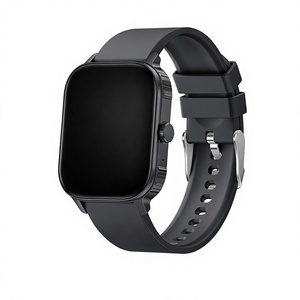
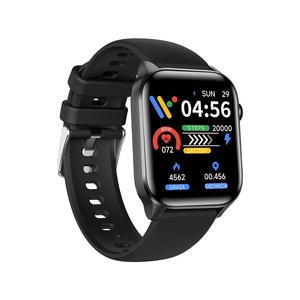
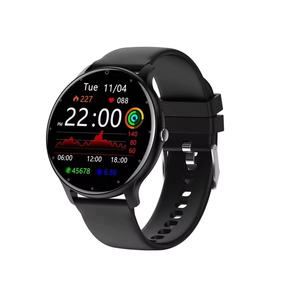
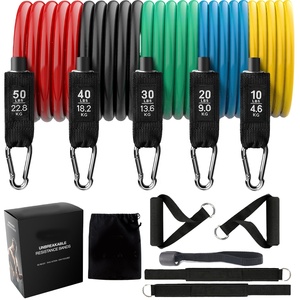
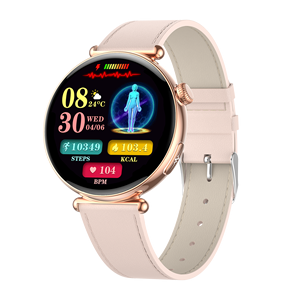
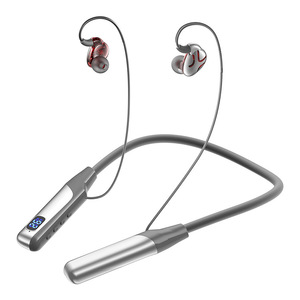
As a premier global wearable OEM/ODM manufacturer and trusted exporter to South Korea, we deliver high-precision GNSS hardware, sub-zero battery endurance, and KC-certified health tracking algorithms designed specifically for Seoul’s active population and institutional procurement requirements.
Navigating the competitive Korean consumer electronics market requires hardware that balances sleek urban aesthetics with rugged, military-grade performance. Below is a engineering overview comparing standard enterprise wearables with our specialized OEM export portfolio designed for Seoul.
| Hardware Parameter | Standard Global Smartwatch | Our Export Grade for Seoul (Letsfit Engineering) | Impact on Local Korean End-Users |
|---|---|---|---|
| GNSS Architecture | Single-Band L1 GPS | Dual-Frequency L1 + L5 Multi-Constellation (GPS, GLONASS, Galileo, BeiDou) | Eliminates signal loss between Seoul's high-rise skyscrapers (Yeouido, Teheran-ro). |
| Optical Health Sensors | Dual-LED Photoplethysmography (PPG) | Multi-Channel 4-Diode PPG + AI Pulse Wave Velocity & SpO2 Oxygenation | Provides precise heart rate data even during cold sub-zero Korean winter runs. |
| Cold Weather Battery Cell | Standard Li-ion (-5°C drop off) | Cold-Resistant Poly-Lithium Cell with Solid-State Thermal Regulation (-20°C operational) | Prevents sudden battery shut-offs during winter hiking on Mount Namsan or Bukhansan. |
| Display Technology | Standard LCD / Low-Nit TFT | Ultra-Bright AMOLED / 1,000 Nits Peak Brightness with Anti-Fingerprint Coating | Crystal-clear visibility under intense midday sunlight along the Hangang River. |
| Regulatory Certification | CE / FCC Only | Fully Certified for KC (Korea Certification) EMC, Radio Act, and Battery Safety Standard | Zero customs friction at Incheon Customs; fully compliant for retail distribution. |
To successfully gain market share in South Korea, wearable devices must adapt seamlessly to the lifestyle of Seoul's tech-savvy demographic. We tailor our firmware, sport tracking profiles, and hardware resilience to four distinct local environments:
From Yeouido to Banpo Bridge, the 80km Hangang bike and running trail demands precise distance logging and continuous lap cadence monitoring. Our GPS algorithm locks satellite positioning in less than 3 seconds, enabling runners to log splits without drift caused by overpasses or river reflection interference.
Seoul is unique in being surrounded by steep granite mountain ranges. Our watches incorporate real-time barometric altimeters, 3D compass navigation, and route backtrack features, offering trail runners and weekend hikers precise elevation gain analytics and off-grid safety security.
South Korea’s public health initiatives, such as Seoul’s "Wrist-Doctor 9988" (손목닥터 9988) project, have normalized daily step counting and metabolic tracking. Our watches offer open SDKs and customized Bluetooth Low Energy (BLE 5.3) protocols to sync steps, sleep cycles, and calorie burn directly into municipal health apps.
South Korea represents one of the world's most sophisticated markets for high-tech wearables. Importers and brand owners must align their product roadmaps with key emerging trends shaping consumer behavior in Seoul:
Korean consumers are increasingly demanding proactive health surveillance. Our watches feature AI-assisted ECG detection, continuous wrist-based SpO2 monitoring, and HRV (Heart Rate Variability) stress analysis. These metrics help users manage high-stress urban workloads and track sleep hygiene with high precision.
With South Korea's high adoption of smart home technology, active users expect their wearable metrics to interface with IoT ecosystems. Our devices integrate low-latency Bluetooth chips capable of connecting concurrently with smart fitness equipment, wireless sports earphones, and mobile health applications.
Backed by our globally recognized brand ecosystem—including Letsfit and LETSCOM—we operate high-capacity, ISO-certified manufacturing facilities engineered for enterprise-grade smartwatch assembly and global distribution.
Every production batch undergoes 100% automated pressure-chamber testing for IP68 and 5ATM ingress compliance, thermal shock resistance (-20°C to 60°C), and drop-impact resistance to ensure zero field-failure rates.
We provide complete customization for the South Korean market: native Hangul (Korean) UI typography, localized companion app development (iOS/Android), custom packaging design, and laser-etched corporate logos on alloy watch cases.
Located close to major logistics hubs, our streamlined export network ensures rapid transit times (air freight in 2–4 days, ocean freight to Incheon in 5–7 days), complete with comprehensive KC compliance documentation to eliminate delays.
Key information for procurement managers, e-commerce brands, and corporate buyers sourcing smartwatches for South Korea.
Yes. We support full KC Certification (Radio Research Agency - RRA for electromagnetic compatibility and RF emissions) as well as KC Safety Certification for built-in lithium polymer batteries. We provide test reports and work closely with local South Korean testing labs to ensure frictionless customs clearance at Incheon International Airport and Port of Incheon.
Absolutely. Our smartwatches feature dedicated vector-font libraries engineered for smooth Korean (Hangul) text rendering. System menus, push notifications from KakaoTalk, SMS alerts, and app health reports are fully localized without line-break errors or missing glyphs.
We accommodate flexible ordering structures. For standard factory-brand items (ready-to-ship), MOQs start as low as 100 units. For full OEM custom branding (custom watch faces, customized retail packaging, and laser etching), our standard MOQ starts at 1,000 units per model.
Our high-end GPS models utilize multi-constellation L1+L5 dual-frequency chips. By processing signals from multiple satellite networks simultaneously (GPS + GLONASS + Galileo + BeiDou), the watch filters out signal reflections caused by glass curtain-wall skyscrapers, keeping positioning error margins under 1.5 meters.
Yes. We offer SDK and API integration packages for corporate fitness programs, hospital health trials, or municipal platforms in Korea. Data points including real-time heart rate, SpO2 readings, step counts, and sleep logs can be securely synced via Bluetooth SDK to your proprietary app platform.