
+1 (855) 296-9981 Wholesale Program
Explore our certified smart wearable hardware lineup, optimized for high-volume B2B export to Kenya, East Africa, and global retail distribution channels.






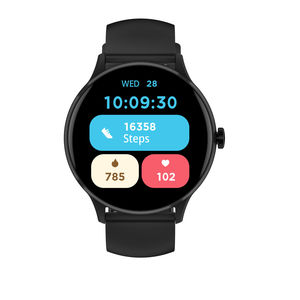

Kenya has firmly established itself as Sub-Saharan Africa’s premier technology powerhouse—widely celebrated as the "Silicon Savannah." Centered around major urban economic engines like Nairobi, Mombasa, Kisumu, and Eldoret, the Kenyan consumer market is witnessing a rapid structural pivot toward preventative healthcare, cardiovascular monitoring, and connected mobile fitness. For international electronics importers, regional consumer brand owners, telecommunications operators, and medical supply distributors, sourcing high-grade Heart Rate Monitor Watches directly from original manufacturing factories represents an unprecedented commercial growth opportunity.
However, exporting consumer wearables to East Africa requires far more than generic off-the-shelf electronics production. The unique environmental conditions, user demographics, and logistical regulatory frameworks in Kenya demand specialized manufacturing engineering. From mitigating high solar irradiance glare with high-luminance AMOLED panels to engineering optical photoplethysmography (PPG) heart-rate sensors capable of maintaining sub-1% error margins across darker skin melanin pigmentation, certified original manufacturers must provide authentic technical value and Information Gain to succeed in Kenya’s competitive retail ecosystem.
Key Market Insight for Kenyan B2B Importers: Wearable health tech adoption in Kenya is projected to maintain a compound annual growth rate (CAGR) exceeding 16.4% over the next decade. Growth is driven by expanding middle-class disposable income, elevated health awareness post-pandemic, widespread 4G/5G mobile connectivity, and seamless mobile money payment integrations such as M-Pesa.
A primary technical barrier faced by generic smartwatch exporters delivering units to African markets is optical sensor degradation. Standard green-light PPG sensors (operating around 525nm to 535nm wavelengths) frequently experience severe signal attenuation and light absorption when penetrating epidermis layers with elevated melanin concentration. This leads to inaccurate pulse detection, missed arrhythmia alerts, and unreliable heart rate variability (HRV) metrics during high-intensity training.
To eliminate optical scattering and reflection noise, our state-of-the-art OEM manufacturing lines utilize customized multi-spectral optical sensor arrays. By pairing standard green LEDs with secondary multi-wavelength infrared (850nm to 940nm) and red-light emitters (660nm), our heart rate algorithms dynamically adjust photodiode amplification gains based on skin reflectance feedback. This guarantees laboratory-grade cardiac telemetry regardless of skin tone gradient or sweat buildup during outdoor athletic exertion.
Kenya's geography ranges from coastal tropical humid zones in Mombasa to high-altitude, semi-arid regions in the Great Rift Valley and cooler highland metropolitan zones in Nairobi. To ensure maximum product longevity and consumer satisfaction, heart rate monitor watches must be tailored to specific regional usage profiles:
Eldoret and Iten are world-renowned training grounds for elite distance runners. Smartwatches designed for these regions feature barometric altimeters, VO2 Max oxygen uptake calculations, multi-GNSS tracking (GPS, GLONASS, Galileo), and precise target heart-rate zone alerts for high-altitude hypoxia workouts.
In Nairobi’s bustling corporate hubs, professionals demand sleek hybrid wearables featuring 24/7 continuous heart rate monitoring, stress index tracking, sleep architecture analysis (Light, Deep, REM), and Bluetooth hands-free calling over high-contrast 1.43-inch AMOLED touch displays.
For safari operators, field rangers, and coastal water-sports enthusiasts, smartwatches require robust IP68 / 5ATM waterproof encapsulation, anti-corrosion silicone straps, dust-proof sealing, and solar-assisted ultra-low power standby modes exceeding 21 days on a single magnetic USB charge.
As smart devices proliferate across East Africa, several macro technology trends are shaping consumer buying preferences and wholesale ordering requirements for importers:
With Kenya leading regional 4G and 5G network rollouts via operators like Safaricom and Airtel, there is accelerating demand for eSIM and NB-IoT enabled smartwatches. These standalone devices transmit real-time heart rate and GPS telemetry directly to cloud-based health monitoring dashboards without requiring proximity to a smartphone. This technology is increasingly integrated into eldercare monitoring, remote patient monitoring (RPM) clinics, and corporate insurance wellness programs across East Africa.
Kenya is a global pioneer in mobile money, where digital transactions form the backbone of daily retail commerce. Next-generation OEM smartwatches are now incorporating secure NFC (Near Field Communication) hardware elements and custom API bridges, enabling contactless point-of-sale payment authorizations linked directly to M-Pesa wallets and regional bank accounts.
Hardware performance is only half the equation. Local consumers and enterprise clients expect white-label iOS and Android companion applications (such as our proprietary Letsfit Life app ecosystem) that support multi-language localizations—including Swahili and English—alongside low-bandwidth data synchronization protocols engineered for areas with variable cellular coverage.
As a world-class original design manufacturer (ODM) and OEM production facility, our manufacturing infrastructure is purpose-built to deliver commercial reliability, scalability, and unmatched cost-efficiency for Kenyan B2B importers.
Operating out of advanced ISO 9001 and ISO 14001 certified smart manufacturing facilities, our production lines feature high-speed SMT (Surface Mount Technology) placement, automated optical inspection (AOI), robotic waterproof pressure testing chambers, and automated biometric simulators. Every batch of heart rate monitor watches undergoes rigorous quality gates before dispatch:
Navigating cross-border trade between Asian manufacturing hubs and Kenyan entry ports requires meticulous regulatory adherence. Importing non-compliant electronic hardware can result in severe customs delays, punitive fines, or cargo rejection at the Port of Mombasa or Jomo Kenyatta International Airport (JKIA), Nairobi.
Regulatory Advisory: The Kenya Bureau of Standards (KEBS) mandates that all regulated electronics entering Kenya must hold a valid Certificate of Conformity (CoC) issued under the Pre-Export Verification of Conformity (PVoC) program prior to shipment clearance.
Partner with a trusted, certified smartwatch factory. Get competitive tier-1 B2B pricing, custom OEM packaging, and dedicated export support tailored for East Africa.
Contact Us