+1 (855) 296-9981 Wholesale Program
Explore engineered white noise generators, acoustic sleeping aids, medical-grade wearables, and precision hardware available for B2B OEM/ODM global distribution.
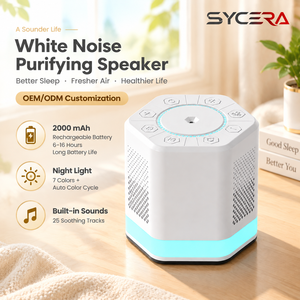
The global demand for portable sound generators—spanning clinical tinnitus masking equipment, consumer sleep therapy devices, infant sound conditioners, and acoustic privacy tools—has expanded at an unprecedented CAGR of 11.4%. Enterprise buyers, health brand distributors, and retail importers face a pivotal strategic decision when sourcing these devices: partnering with high-velocity OEM/ODM manufacturing hubs in China (such as Shenzhen and Dongguan) or engaging high-precision specialized acoustic laboratories in Germany (such as those in Bavaria and Baden-Württemberg).
This industry whitepaper provides an exhaustive comparative analysis of sound generator production capabilities across China and Germany. We examine digital signal processing (DSP) architecture, acoustic spectrum calibration, component-level supply chain economics, localized European regulatory compliance (CE, RoHS, REACH, DIN standards), and turn-key manufacturing scalability.
While German acoustic factories excel in custom industrial acoustic calibration, medical-grade audiometry, and specialized low-volume engineering, top-tier Chinese manufacturing centers provide unmatched economies of scale, rapid tooling iteration (14-21 days), integrated multi-sensory features (such as negative ion air purification and smart app ecosystems), and cost optimization of up to 45% without sacrificing EN 62368-1 electro-acoustic compliance.
Proprietary non-repeating acoustic algorithms generation. Delivers pure white noise, pink noise, brown noise, and soothing organic ambient sounds without jarring audio loops or micro-gaps.
Fully compliant with EU Noise Guidelines, EN 62368-1 audio safety standards, and strict decibel-limiting thresholds for infant anti-startle acoustic health (< 60 dBA at 1 meter).
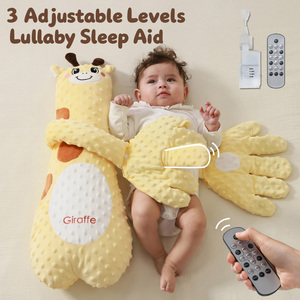
Seamlessly combines active white noise generation with anion air purification, medical ECG monitor synching, warmth-retaining PP cotton anti-startle pillows, and smart app tracking.
Evaluating factory performance requires a detailed matrix of technical metrics, production timelines, custom tooling flexibility, and total cost of ownership (TCO). Below is an empirical comparison tailored for international procurement directors.
| Evaluation Parameter | China Top Factories (e.g., Shenzhen/Letsfit Hub) | German Factories (e.g., Bavaria/Stuttgart Labs) |
|---|---|---|
| Primary Market Focus | High-Volume Retail & OEM/ODM Brands | Clinical Audiology & Custom Industrial Masking |
| Acoustic Chipset Architecture | 32-bit High-Efficiency Audio DSPs, Custom Flash ROM algorithms | Custom Analog Frequency Generators & Modular DSPs |
| Minimum Order Quantity (MOQ) | 500 – 1,000 units (Flexible custom branding) | 5,000 – 10,000 units (Standard models) or High-Cost Niche batches |
| New Tooling Lead Time | 15 – 25 Business Days | 60 – 90 Business Days |
| Integrated Smart Ecosystem | App Bluetooth/Wi-Fi control, ECG/Health sync, Anion purifier modes | Standalone single-function acoustic modules |
| Acoustic Chamber Testing | ISO 3744 Full Anechoic Chamber testing in-house | Third-party certified acoustic lab verification (TÜV/DEKRA) |
| Cost Optimization Index | Baseline 100% (Maximum Cost Efficiency) | 220% – 320% relative cost baseline |
| Regulatory Documentation | CE, RoHS, REACH, FCC, PSE, UN38.3 (Lithium BMS) turnkey reports | DIN EN 60601, CE Medical Device Regulation (MDR) specialization |
Modern portable sound generators operate far beyond basic speaker playback. The underlying engineering relies on continuous digital signal synthesis designed to obscure background acoustic spikes—a process governed by psychoacoustic masking principles.
Acoustic engineers categorize masking noise into distinct spectral power distributions:
Top Chinese facilities utilize 32-bit ultra-low latency DSP chips that perform real-time wave synthesis, ensuring continuous playback without repeating digital patterns. This eliminates the cognitive "loop fatigue" common in low-end consumer audio devices.
The acoustic fidelity of a portable sound generator is heavily constrained by speaker chamber design. Leading factories integrate neodymium magnetic dynamic drivers combined with passive bass radiators. This configuration yields a rich frequency response from 80 Hz up to 18 kHz within a compact chassis (< 300 grams).
Furthermore, structural housing employs acoustic-grade ABS/PC fireproof polymers equipped with internal silicone dampeners. This structural decoupling prevents unwanted physical resonance and chassis rattle when generating low-frequency brown noise at maximum output (85 dBA).
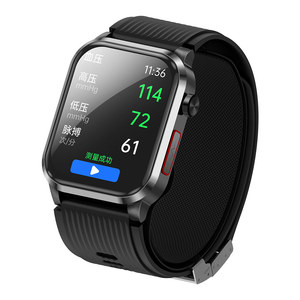
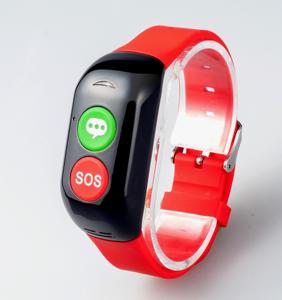
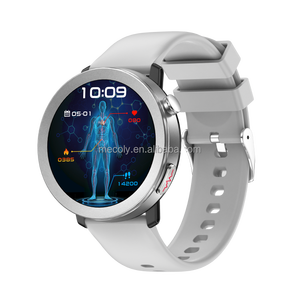
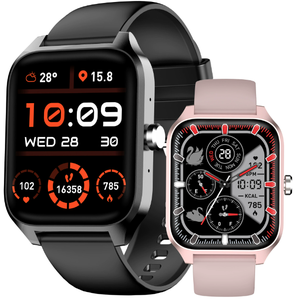
In response to evolving consumer health trends across Western Europe and North America, portable sound generators are no longer isolated bedside appliances. Advanced Chinese manufacturers are converging sound therapy with biometrics. Devices now interconnect via Bluetooth Low Energy (BLE 5.3) with smart health watches (such as ECG monitors and sleep tracking wristbands). When a connected smartwatch detects micro-arousal stages or elevated heart rates during REM sleep, the sound generator dynamically adjusts its frequency spectrum and decibel output to smooth sleep transitions.
Understanding regional adoption patterns is essential for B2B distributors customizing products for European markets, specifically the DACH region (Germany, Austria, Switzerland).
German commercial clients heavily prioritize noise insulation (Schalldämmung) and acoustic privacy in medical practices (Arztpraxen), law offices, and modern open-plan workspace environments (Grossraumbüros). In these environments, battery-operated portable sound generators with integrated white noise masking algorithms prevent speech eavesdropping and comply with strict EU GDPR confidentiality mandates.
Consumer demand in Germany, the UK, and Scandinavia has pivoted sharply toward holistic sleep optimization. Portable sound generators equipped with secondary functions—such as anion air ionization (removing sub-micron airborne dust) and soft ambient nightlights (2700K warm LED color temperature)—achieve significantly higher conversion rates on platforms such as Amazon Europe and inside major electronics retail chains.
Products imported into the German market must adhere strictly to the Elektro- und Elektronikgerätegesetz (ElektroG) for WEEE registration, Verpackungsgesetz (VerpackG) for packaging recycling, and CE-RED (Radio Equipment Directive 2014/53/EU) for any unit utilizing wireless connectivity. Leading Chinese export factories offer pre-certified compliance documentation, drastically lowering time-to-market for European importers.
Partnering with a tier-1 sound generator and smart health equipment manufacturer provides key structural advantages for global brand owners and distributors:
Comprehensive technical and commercial answers tailored for international buyers, supply chain managers, and brand managers.
German factories generally specialize in niche, custom-engineered clinical audiometry and specialized industrial acoustic masking units with small production runs. Top Chinese factories excel in high-speed, scalable consumer and medical-adjacent manufacturing, offering state-of-the-art DSP technology, integrated smart app capabilities, rapid prototyping, and significantly lower unit costs while maintaining global certification compliance (CE, FCC, RoHS).
Infant safety is regulated under strict European pediatric guidelines. Our sound devices feature hardware-level decibel limiters capped at 60 dBA at 1 meter. Additionally, acoustic drivers are tuned to eliminate high-frequency harshness above 8 kHz, protecting sensitive infant ear canals while offering soothing low-frequency pink noise.
For standard OEM orders with custom silk-screen branding and custom packaging, the minimum order quantity (MOQ) starts at 500 to 1,000 units, with production lead times averaging 18-25 business days. Full ODM projects requiring custom structural molds take approximately 30-40 days from 3D CAD approval to golden sample sign-off.
Yes. All portable sound units with internal rechargeable lithium batteries include full UN38.3 test reports, MSDS documentation, and IEC 62133 certification, ensuring safe air and sea freight logistics directly to European warehouses.
Absolutely. Our acoustic R&D team can flash custom audio ROM binaries into the onboard DSP. You can provide your own high-fidelity WAV audio samples (24-bit/48kHz) or select from our library of over 50 lab-verified, non-repeating acoustic files.
We implement AQL 0.65 Level II inspection standards. Every unit undergoes 100% audio frequency spectrum analysis, electrical safety screening, key-press lifecycle testing, and a minimum of 8 hours of continuous battery burn-in prior to final packaging.
Partner directly with leading sound generator manufacturing facilities. Request technical specifications, factory audit reports, wholesale pricing matrices, or custom OEM samples today.
Get a Quote