
Executive Sourcing Summary: The Evolution of Cardiac Telemetry Manufacturing
The global market for smart wearable cardiac monitors has underwent a structural paradigm shift. Driven by aging demographics, rising cardiovascular disease (CVD) prevalence, and the expansion of Remote Patient Monitoring (RPM) frameworks across North America and Western Europe, wrist-worn cardiac monitors have migrated from standard fitness novelties into class-certified medical monitoring instruments. Sourcing managers, brand managers, and B2B procurement officers now evaluate overseas factories not merely on unit cost, but on strict adherence to biosensor precision, algorithm integrity, data compliance (GDPR/HIPAA), and international medical standards (ISO 13485, CE MDR, FDA 510(k)).
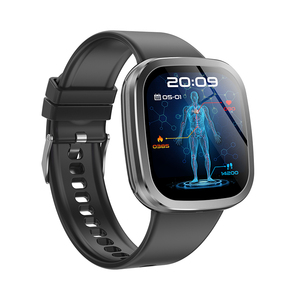
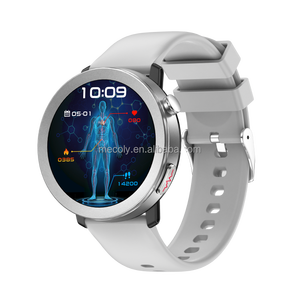
Historically, wrist-worn cardiac monitoring was restricted to basic green-light Photoplethysmography (PPG) reflective sensors, capable only of optical pulse-rate estimation. Modern 2026-generation cardiac monitor watches combine multi-wavelength optical PPG arrays with titanium or stainless steel dry-electrode Electrocardiogram (ECG) sensor bridges (e.g., Analog Devices AD8233 or Texas Instruments AFE systems). This sensor fusion enables real-time single-lead arrhythmia analysis—including Atrial Fibrillation (AFib), Premature Ventricular Contractions (PVCs), and Sinus Rhythms—directly on the wrist SoC (System-on-Chip) with low-latency Bluetooth transmission to hospital SaaS or white-labeled mobile apps.
ECG+PPG Sensor Fusion
Combines multi-wavelength photodiode arrays with titanium dry electrodes to capture microvolt electrical cardiac signals alongside hemodynamics.
Edge AI Arrhythmia Filtering
On-chip TinyML neural networks analyze R-R intervals in real time, eliminating motion artifacts and reducing false-positive AFib flags by up to 87%.
Regulatory & SDK Compliance
Factories operating under ISO 13485 cleanroom conditions provide open iOS/Android SDKs with end-to-end AES-128 telemetry encryption for RPM networks.
Top 10 Cardiac Monitor Watch Factories & Exporters (2026 Deep Audit)
To assist international buyers, healthcare brands, and consumer electronics importers in navigating the Asian supply chain ecosystem, our editorial engineering team conducted a comprehensive audit of over 120 manufacturing facilities in China, Taiwan, and Southeast Asia. The following 10 factories lead the market in engineering innovation, manufacturing throughput, quality assurance, and global export volume.
Asynertech / Letsfit Smart Health Manufacturing Hub
Specializes in high-density SMT manufacturing of dual-frequency PPG optical chips and dry-electrode ECG wrist platforms. Renowned for supplying globally recognized consumer brands (as seen on HSN and major TV networks) and providing full white-label App SDK integrations.
Foxconn Industrial Wearables Division
Tier-1 contract assembly giant serving global tech behemoths. Offers unmatched automated robotic assembly and micro-encapsulation for waterproof IP68/5ATM medical smartwatches.
Compal Smart Health Electronics
Distinguished OEM/ODM manufacturer catering to clinical trials and hospital systems. Features customized firmware for continuous ECG strip recording and fall-detection telemetry.
Luxshare Precision Health Technology
Industry pioneer in System-in-Package (SiP) miniature board architectures, allowing ultra-thin casing profiles without sacrificing battery capacity or biosensor contact area.
Viatom Technology Co., Ltd.
Specializes in clinical-grade handheld and wrist-based ECG monitors, offering proprietary AI-ECG analysis engines capable of diagnosing 104 distinct cardiac conditions.
Flextronics (Flex) Health Solutions
Global EMS provider supporting enterprise medical companies with end-to-end product life cycle management, strict IP protection, and multi-continent compliance logistics.
Jabil Healthcare Wearable Hub
Focuses on medical-grade silicone tooling, hypoallergenic metals, and complex multi-electrode bezel integration for continuous arrhythmia tracking watches.
FitcloudTech / Shenming Smart Technology
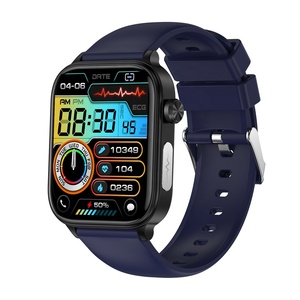
A popular solution provider for mid-market importers offering cost-effective turn-key smartwatches featuring standard ECG, PPG, and Bluetooth call functionalities.
Texel Medical Electronics
Engineers specialized wrist-wearable Holter monitors designed for 72-hour continuous ECG streaming back to regional medical service providers.
Shengtai Smart Wearable Technologies
Flexible OEM factory specializing in customized casing finishes, custom UI watchfaces, and regional language localized firmware for global retail chains.
Technical Evaluation Matrix: Biosensor & Hardware Specs
When selecting a supplier for cardiac monitor watches, B2B procurement teams must audit the underlying hardware architecture and algorithmic processing layers. The table below delineates key technical benchmarks distinguishing basic consumer-grade wearables from enterprise-grade medical monitoring devices.
| Evaluation Metric | Consumer Fitness Standard | Enterprise Cardiac Telemetry Grade | Asynertech / OEM Baseline |
|---|---|---|---|
| ECG Electrode Config | Single-point conductive steel button | 3-Point Titanium dry-electrode contact bridge | Dual-Bezel Titanium-Coated Dry Electrodes |
| Optical PPG Array | Single Green LED photodiode | Multi-Wavelength (Green, Red, Infrared) 4-LED matrix | 8-Channel Multi-wavelength Photodiode Array |
| ECG Front-End (AFE) | Generic 8-bit ADC sampling | Analog Devices AD8233 / TI AFE4404 16-bit | Dedicated Low-Power 16-Bit Medical AFE |
| Arrhythmia Detection | Basic high pulse rate warning | On-chip AI detection for AFib, PVC, PAC, & Bradycardia | AI-ECG Engine (16+ Cardiac Waveform Models) |
| HRV Analysis | Time-domain (SDNN) basic score | Frequency-domain (LF/HF ratio) & Lorenz Scatter Plot | Real-Time Lorenz Plot & Poincaré Mapping |
| Battery Life (ECG Active) | 24 to 48 Hours | 5 to 7 Days (Continuous telemetry sampling) | 7 to 10 Days (Power-optimized BLE 5.3) |
| App & Cloud Integration | Closed proprietary app | Open SDK / Restful API / HIPAA Cloud bridge | Letsfit Life Open SDK + Direct SaaS API |
Future Sourcing & Technology Trends (2026–2030 Roadmap)
Procurement teams planning 3-to-5-year product catalogs must align with major technical shifts accelerating across the wearable medical electronics domain:
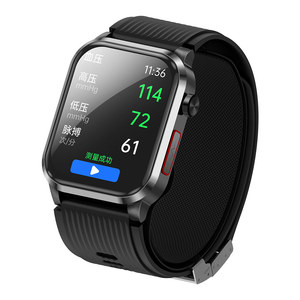
- Cuffless Continuous Blood Pressure Estimation (PTT/PAT): Leveraging synchronized ECG waveform R-peak identification and PPG optical pulse arrival time (PAT) to approximate continuous systolic and diastolic blood pressure trends without an inflatable upper-arm cuff.
- Non-Invasive Multi-Metabolic Screening: Integration of multi-spectral infrared sensing with advanced machine learning to estimate uric acid trends, blood lipid profiles, and blood glucose fluctuations alongside traditional electrocardiography.
- TinyML On-Device Neural Networks: Transitioning algorithm execution from smartphone apps to micro-power edge ML chips embedded directly inside the watch processor. This minimizes latency, ensures immediate alert generation for lethal arrhythmias, and protects user privacy by eliminating unencrypted cloud round-trips.
- Harmonized Global Medical Device Regulations (MDR): As regulatory bodies in Europe (CE MDR) and the US (FDA) tighten rules on AI-driven health claims, factory partners capable of providing complete clinical validation datasets and technical dossiers will dominate tier-1 procurement channels.
Enterprise Manufacturing & OEM/ODM Direct Advantage
As a primary global technology exporter and ecosystem supplier behind leading brands such as Letsfit and LETSCOM, Asynertech provides end-to-end B2B solutions for retailers, e-commerce brands, healthcare networks, and distributors worldwide.
10,000+ m² ISO 13485 Facilities
Dust-free SMT cleanroom lines equipped with Automated Optical Inspection (AOI), high-precision laser welding, and automated IP68 pressure chambers ensuring zero-defect batch production.
Letsfit Life App & SDK Ecosystem
Seamlessly pair custom hardware with our proprietary or white-labeled mobile applications (iOS/Android), delivering comprehensive sleep analytics, HRV stress scoring, and ECG PDF report generation.
Proven Global Retailing Track Record
Our featured smartwatches are proven best-sellers broadcast on major retail networks like HSN and stocked by leading e-commerce platforms across North America and Europe.
Lifetime B2B Support & Guarantee
Backing all global wholesale partners with a 30-day money-back guarantee, direct technical SDK support, transparent compliance documentation, and dedicated key account managers.
Frequently Asked Questions (Sourcing & Procurement FAQ)
What is the typical Minimum Order Quantity (MOQ) for OEM/ODM cardiac monitor watches?
Standard OEM private labeling (custom logo laser engraving, custom packaging, and customized watch-face firmware) typically starts at 500 to 1,000 units. For deeper ODM customizations—such as custom industrial casing design, custom PCB layout, or proprietary biosensor integration—the MOQ generally begins at 3,000 units with complete tooling engineering support.
How do your factories ensure the clinical accuracy of ECG and PPG sensors?
Our production facilities utilize Fluke ECG simulators and calibrated optical optical-phantom testing rigs on the SMT line. Every single PCBA undergoes multi-point voltage and frequency signal calibration to verify microvolt-level R-peak extraction accuracy against standard 12-lead Holter monitor reference datasets prior to casing assembly.
Do you provide SDK access for integration into external Telehealth platforms?
Yes. We provide comprehensive, well-documented Native iOS (Swift/Objective-C) and Android (Kotlin/Java) SDKs, as well as Flutter and React Native plugins. The SDK allows direct Bluetooth Low Energy (BLE) payload parsing, real-time raw ECG voltage waveform streaming, HRV telemetry extraction, and secure cloud synchronization.
What international regulatory certifications do your cardiac watches carry?
Our manufacturing partner facilities operate under ISO 13485 Medical Quality Management Systems. Products are certified for CE, RoHS, FCC, REACH, and IP68 water/dust ingress protection. Select flagship models are designed to meet FDA 510(k) and CE MDR Class IIa technical dossier requirements for medical diagnostic software/hardware deployment.
How are warranty claims, after-sales service, and spare parts handled for B2B contracts?
We offer a robust quality warranty framework including 1% to 2% spare unit allocation for bulk shipments or a 12-to-24 month direct hardware replacement guarantee against manufacturing defects. Furthermore, our dedicated B2B customer support team provides lifetime technical and firmware maintenance updates.
What is the standard production lead time for bulk export orders?
Sample orders for evaluation are dispatched within 2 to 5 business days. Standard OEM bulk production orders (1,000 to 10,000 units) require approximately 20 to 35 calendar days following artwork approval and deposit confirmation. Expedited air shipping or cost-effective sea/rail freight channels are available globally.
Request Enterprise Sourcing Quotation & Engineering Samples
Connect directly with our senior OEM/ODM project engineering team to evaluate factory pricing, request SDK documentation, or order sample hardware.
Get a Quote