
+1 (855) 296-9981 Wholesale Program



The global smart wearable ecosystem is undergoing a momentous structural shift. Consumer demand has rapidly migrated beyond elementary step counting and passive optical heart rate tracking toward clinical-grade cardiac biometric monitoring. At the center of this paradigm shift is the integration of Electrocardiogram (ECG) micro-sensors into everyday smartwatches. For global procurement officers, consumer electronics brands, healthcare distributors, and tele-health providers, identifying qualified Custom OEM ECG Smart Watch Factories & Suppliers is no longer merely an exercise in bill-of-materials (BOM) cost containment—it is a strategic imperative centered on sensor precision, regulatory compliance, firmware agility, and supply chain scalability.
Unlike standard smartbands utilizing single-wavelength photoplethysmography (PPG), an ECG smart watch measures the microvolt electrical impulses generated by the polarization and depolarization of the cardiac tissue. Engineering an OEM device capable of capturing Lead-I ECG waveform fidelity while housed within a stylish 5ATM water-resistant enclosure demands tier-one industrial engineering. This whitepaper provides procurement directors and product managers with an authoritative roadmap detailing hardware architecture, micro-electrode fabrication, software integration, regulatory approval frameworks (FDA 510(k), CE MDR), and verified OEM procurement practices.
To specify the correct manufacturing criteria when issuing Requests for Quotation (RFQs) to OEM suppliers, B2B buyers must understand the sensor fusion architecture powering modern ECG smartwatches. High-performance models pair Analog Front End (AFE) silicon with dual-wavelength optical arrays and precision metal electrodes.
Utilizing 316L stainless steel or titanium alloy electrode rings integrated into the watch bezel and back housing to capture clean microvolt differential voltages across the wearer's wrists.
Incorporating high-impedance Analog Front Ends (e.g., Texas Instruments AFE4900 or Maxim Integrated chipsets) offering high Common Mode Rejection Ratio (CMRR > 100dB) to strip ambient noise.
Simultaneous optical pulse wave analysis and electrical waveform collection allows real-time calculation of Pulse Transit Time (PTT), arterial stiffness, and early arrhythmia screening.
| Performance Metrics | Basic Consumer Smartband | Standard Fitness Smartwatch | Custom OEM Medical ECG Smartwatch |
|---|---|---|---|
| Primary Biometric Sensor | Single-Green Light PPG | Multi-LED Optical PPG | Dual-Lead ECG Electrodes + Multi-Spectral PPG |
| Cardiac Analysis Capabilities | Average Heart Rate (BPM) | HRV & Basic Pulse Spot Checks | Atrial Fibrillation (AFib), PVC, PAC, QRS Interval Analysis |
| Signal Processing Unit | Low-cost 8-bit MCU | ARM Cortex-M4 SoC | High-CMRR Dedicated AFE + ARM Cortex-M33 Dual Core |
| Enclosure & Electrode Materials | ABS Polycarbonate Plastic | Aluminum Alloy + Silicon | Medical 316L Stainless Steel / Titanium + PVD Nanocoating |
| SDK & Cloud API Extensibility | Closed Ecosystem / No Export | Consumer App Sync Only | Open BLE GATT Services, Raw Data CSV Export, Telehealth APIs |
| Regulatory Manufacturing Target | CE / FCC Consumer EMC | CE Consumer Directives | ISO 13485 Manufacturing, FDA 510(k) Ready, CE MDR Class IIa |
As the wearable technology landscape matures, enterprise buyers must anticipate key macro trends influencing manufacturing workflows, material selection, and software requirements over the next five years.
First-generation ECG watches required users to manually press an electrode for 30 seconds to capture a static waveform readings. Future procurement contracts increasingly mandate passive background atrial fibrillation tracking, where the optical PPG sensor runs continuous anomaly detection routines and automatically alerts the user to trigger a clinical Lead-I ECG measurement. OEM suppliers capable of supplying pre-certified firmware algorithms for automatic optical-to-electrical handshakes hold a significant competitive advantage.
Legacy wearables rely heavily on cloud servers to compute complex Fast Fourier Transforms (FFT) and machine learning models for arrhythmia classification. Modern factory architectures integrate micro-power edge AI neural networks directly onto the smartwatch SoC. This reduces data transmission bandwidth, conserves battery capacity, and enables instantaneous, offline clinical alerts for Sinus Rhythm, Atrial Fibrillation, Tachycardia, and Bradycardia.
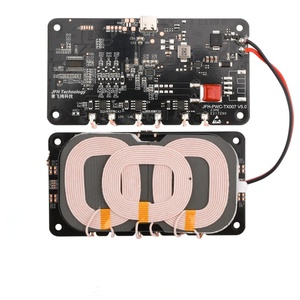
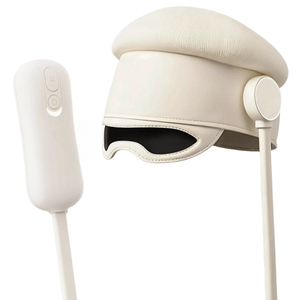
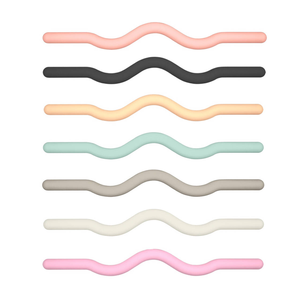
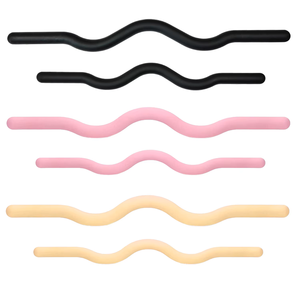
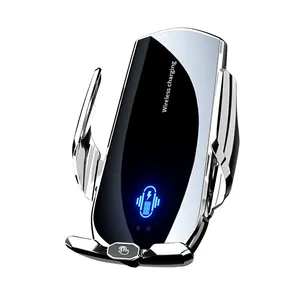
Leading enterprise brand buyers are expanding beyond standalone smartwatch sales to build comprehensive health and wellness product suites. For instance, pairing an OEM ECG smartwatch with customized air compression migraine relief devices, wave pilates toning equipment, wireless vehicle charging docks, or 3-coil 20W Qi PCBA modules creates a unified digital health lifestyle ecosystem. Supplying factory-direct accessories alongside wearable technology simplifies supply chain vendor management and drives higher customer lifetime value (LTV).
Leveraging decades of consumer electronics engineering, global logistics management, and broadcast-level product validations (such as featured product launches on HSN and tier-one retail channels), our manufacturing ecosystem brings unprecedented rigor to white-label ECG smartwatch production.
Our state-of-the-art production facilities operate certified Class 100,000 cleanrooms dedicated to electro-optical sensor mounting, micro-electrode laser welding, and automated waterproofing inspection.
We provide native iOS and Android SDKs, complete white-label mobile applications (built upon proven architecture similar to the Letsfit Life App ecosystem), and HIPAA-compliant RESTful cloud APIs.
Every unit undergoes rigorous thermal shock testing, 5ATM static pressure hydrostatic chamber testing, electro-static discharge (ESD) shielding tests, and automated ECG signal simulator verification.
Below are answers to critical technical, operational, and regulatory questions frequently raised by B2B buyers during factory audits and vendor selection.
For standard custom logo branding and customized packaging utilizing our existing tooling models (e.g., LIFE E46 or E42 architecture), the standard MOQ starts at 1,000 units. For fully customized industrial design tooling, bespoke alloy housing molds, or custom PCBA board spin-outs, the MOQ typically ranges between 3,000 to 5,000 units depending on component sourcing requirements.
Our ISO 13485-certified manufacturing facilities supply global buyers with complete Technical Construction Files (TCF), biocompatibility reports (ISO 10993 for skin contact materials), electrical safety documentation (IEC 60601-1-11), and raw clinical ECG validation data datasets required by regulatory bodies to expedite your brand's 510(k) clearance or CE Class IIa submission.
Yes. We offer fully documented Bluetooth Low Energy (BLE) GATT service profiles, Android/iOS native SDK packages, and cloud API endpoints. Your software engineering team can effortlessly ingest raw ECG voltage arrays, heart rate variability metrics, photoplethysmography data, and sleep metrics directly into your private EHR/EMR server infrastructure.
Rapid industrial design and 3D-printed prototype samples are delivered within 10 business days. Full mechanical tooling, mold construction, PCBA layout optimization, and firmware tailoring typically take 35 to 45 days. Mass production pilot runs are executed within 20 days following final golden sample approval.
We utilize proprietary double-injection molding combined with nano-dispensing waterproof sealant compounds around the perimeter of the 316L stainless steel micro-electrodes. Every single watch chassis undergoes automated vacuum dry-leak testing and 50-meter hydrostatic liquid immersion testing prior to final PCB potting.
Accelerate your brand's entry into clinical wearable tech. Request factory direct quotes, sample evaluation kits, or detailed technical whitepapers today.
Contact Us