+1 (855) 296-9981 Wholesale Program
High-reliability aquatic audio gear and connected smart fitness wearables engineered for international importers, distributors, and brand partners.
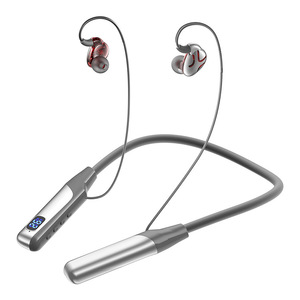
Sourcing waterproof consumer electronics for European and North American retail distribution requires strict adherence to international safety, radio frequency, and material toxicity mandates. CE certification for swimming headphones goes beyond standard consumer audio markings, demanding comprehensive testing across multiple directives.
Swimming headphones utilizing dual Bluetooth 5.3 and 2.4GHz RF wireless modules undergo rigorous EMC (Electromagnetic Compatibility) and SAR (Specific Absorption Rate) testing to guarantee minimal RF interference and safe acoustic energy emission during continuous skin-contact operation in chlorinated water.
Submersible bone conduction and direct-pitch audio transducers must strictly adhere to audio-visual equipment safety standards. Integrated lithium-polymer batteries are encased in hermetically sealed micro-chambers, preventing thermal runaway even under prolonged hydrostatic pressure changes.
Given extended exposure to skin, sweat, and pool chemicals (chlorine, bromine, salt brine), all outer silicone jackets and titanium memory wire sleeves are certified free of phthalates, heavy metals, and skin-sensitizing allergens under REACH Annex XVII and EU RoHS 2.0 regulations.
A critical decision for B2B buyers is choosing between Bone Conduction (temporal bone vibration) and Liquid-Pitch Air Conduction (dynamic acoustic ports) for underwater playback. Water attenuates 2.4GHz Bluetooth signals within 15cm of depth, making local storage and acoustic driver design vital.
| Acoustic Architecture | Underwater Transmission Mode | IP Submersion Rating | RF / Wireless Performance | Recommended Sourcing Use Case |
|---|---|---|---|---|
| True Bone Conduction (TBC) | Temporal Bone Mechanical Vibration | IP68 (Continuous 5m Submersion) | Local MP3 Dual-Mode (Storage Required) | Professional Swimmers, Triathletes, Lap Training |
| Direct-Pitch Hydro-Acoustic | Acoustic Directional Waveguides | IPX8 (Continuous 3m Submersion) | High-Bandwidth Local Storage + BT 5.3 | Casual Fitness Swimmers, Water Aerobics |
| Hydro-Shielded In-Ear Dynamic | Silicone Gasket Sealed Micro-Drivers | IPX7 / IPX8 Liquid Nano-Coated | Bluetooth 5.3 (Surface Waters / Gym) | Open-Water Surface Swimming & Multisport |
Understanding structural innovations and consumer shifts empowers B2B buyers to select high-margin product lines built for long-term category expansion.
Traditional Type-C rubber gaskets are prone to user error and water ingress over prolonged use. Future CE-certified OEM lines are standardizing on 4-pin magnetic gold-plated POGO pins and fully enclosed inductive wireless charging platforms, eliminating water exposure vectors entirely.
Water density significantly muffles low-frequency sound waves. Next-generation aquatic headsets integrate digital signal processors (DSP) that automatically detect submersion via ambient pressure sensors, instantly swapping EQ presets from 'Land Acoustic' to 'Underwater Sub-Bass Boost'.
Cross-category integration is accelerating rapidly. Consumers demand wearables that seamlessly transition from lap swimming to marathon running. Importers are increasingly prioritizing supply chain partners capable of offering unified software ecosystems (such as the Letsfit Life App ecosystem).
Waterproof consumer electronics carry significantly higher RMA (Return Merchandise Authorization) risks compared to standard Bluetooth audio. Leading certified manufacturers employ multi-tier automated quality assurance protocols to guarantee product longevity.
Rather than relying solely on chemical adhesive glues, structural joints utilize liquid silicone rubber (LSR) double-injection overmolding. This creates a monolithic molecular bond around the internal frame, resisting salt corrosion, chlorine breakdown, and temperature fluctuations from -10°C to +45°C.
Before PCB assembly and final packaging, 100% of manufactured acoustic shells undergo automated pressure chamber testing (simulating 50 meters of hydrostatic depth for 60 minutes). Any unit exhibiting micro-bubble leakage or vacuum pressure decay is automatically rejected by robotic sorters.
As a secondary safeguard against micro-condensation caused by rapid temperature drops (e.g., jumping into cold pool water), internal printed circuit boards are coated with ultra-thin atomic vapor deposition (AVD) hydrophobic nano-films (IPX9 level barrier).
Detailed technical and commercial answers to streamline your OEM/ODM vendor evaluation process.