
0%

Choosing the best Heart Rate Monitor Watch is not as simple as comparing screen size, battery life, or brand reputation. A reliable model should turn heart data into useful decisions during running, cycling, recovery, and everyday movement. It should also feel comfortable at 6 a.m., when a cold wrist and loose strap can weaken optical readings.

Dr. Robert Sallis, a sports-medicine physician and longtime advocate of exercise, says, “Exercise is medicine.” That idea gives heart-rate technology a practical purpose. A watch can help users notice rising effort, identify unusual resting patterns, and maintain a safer training pace. However, it cannot replace medical advice or confirm a heart condition. Numbers need context.

Accuracy depends on skin tone, wrist movement, fit, sweat, tattoos, and sensor quality. Chest straps often respond faster during intervals, while wrist sensors offer greater convenience. No single watch wins for every person. That matters.

This guide examines the leading Heart Rate Monitor Watch options through accuracy, comfort, software, battery endurance, workout features, and health insights. We will consider independent testing where available, not just manufacturer promises. We will also question impressive claims, because a polished graph can still hide delayed readings or confusing alerts.

The right choice should match your body, training habits, and health goals. For serious symptoms, speak with a qualified clinician. A watch can support awareness, but it should never create false confidence.
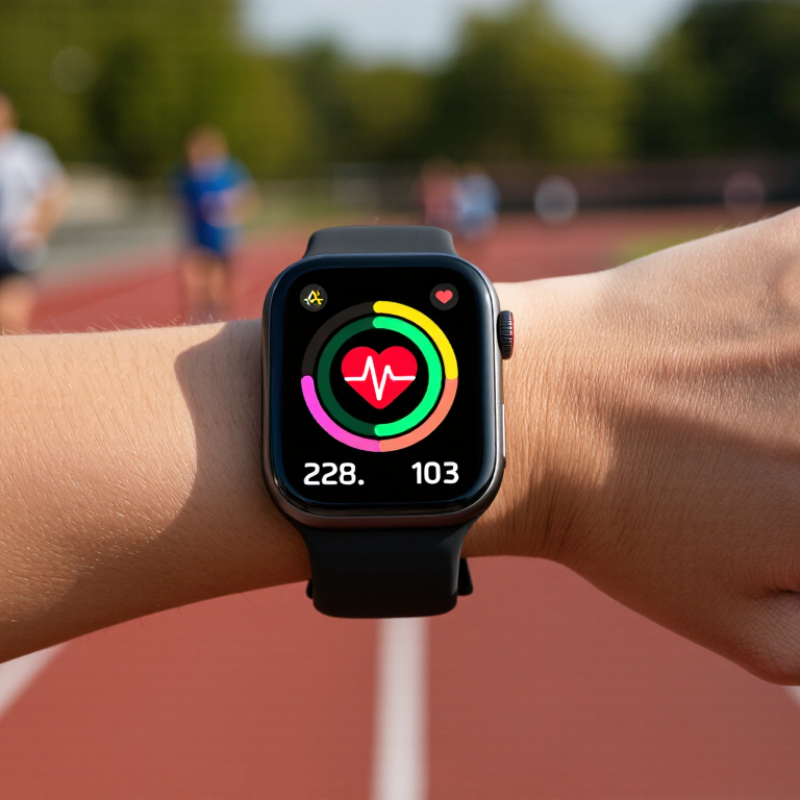
What Is the Top Heart Rate Monitor Watch?

Defining Top Heart Rate Monitor Watches: ECG, PPG, and Accuracy Metrics

What Is the Top Heart Rate Monitor Watch?

A top heart rate monitor watch should be judged by measurement quality, not screen design. ECG sensors detect the heart’s electrical activity through skin contact. They can identify each heartbeat with strong timing precision. However, readings may require a steady finger or firm wrist contact. They are less convenient during intense movement.

PPG sensors use green or infrared light to estimate blood volume changes. This method works continuously during walking, sleep, and many workouts. In practical use, a snug fit matters greatly. Loose contact, sweat, tattoos, and rapid arm movement can create errors. The display may look precise, but appearance proves little. Small delays can matter during intervals.

Accuracy reports should include mean absolute error, not only a claimed percentage. A two-beat difference may be acceptable during easy exercise. It could matter more for clinical monitoring. Researchers also examine agreement with a reference ECG, response time, and performance across skin tones and exercise intensities.

I have found that cold wrists can produce surprisingly poor readings. That detail is easy to overlook. No watch is perfect. Users should compare unusual results with professional medical equipment, especially when symptoms appear.

Comparing ECG and PPG: Clinical Signals Versus Everyday Wrist Tracking

What Is the Top Heart Rate Monitor Watch?

The answer depends on the signal you need. ECG records electrical activity through skin-contact electrodes. It can capture rhythm patterns with clinical relevance, but it usually requires stillness and deliberate contact. PPG uses light to estimate pulse-related blood-volume changes. It works quietly during walking, sleep, and training. Yet motion, sweat, tattoos, cold skin, or a loose strap can distort readings. PPG is convenient, not infallible.

For everyday wrist tracking, PPG offers continuous heart-rate trends and useful alerts. ECG is more targeted, helping investigate an unusual rhythm when the wearer can sit still. Neither method should diagnose a condition alone. A qualified professional must interpret symptoms, history, and recorded data. During a hill climb, a watch may show a sharp spike, then settle slowly. That delay can be normal. It might also reflect poor contact. One number is not the whole story.

Tips: Wear the device snugly, above the wrist bone. Keep the sensor clean and dry. For ECG readings, rest your arm and follow the device instructions. Compare unusual results with how you feel. If repeated readings concern you, share the records with a healthcare professional. Small details matter.

What Is the Top Heart Rate Monitor Watch? - Comparing ECG and PPG: Clinical Signals Versus Everyday Wrist Tracking

Comparison Dimension ECG-Based Monitoring PPG-Based Wrist Tracking
Physiological signal Measures the heart’s electrical activity and records voltage changes associated with cardiac depolarization and repolarization. Measures changes in blood volume near the skin using reflected light, then estimates pulse rate from the resulting optical waveform.
Typical sensor arrangement Requires electrical contact between electrodes, commonly using the watch case and a finger touching a designated electrode. Uses light-emitting diodes and photodetectors positioned against the skin on the underside of the wrist.
Primary output A short single-lead or limited-lead electrocardiogram, usually displayed as a waveform and heart rate. Continuous or intermittent pulse-rate estimates, often accompanied by trend data and heart-rate zones.
Strength for rhythm assessment Better suited to examining rhythm regularity and some electrical waveform features during a recorded episode. Useful for identifying pulse-rate patterns and possible irregularity alerts, but it does not directly display the heart’s electrical waveform.
Heart-rate measurement Calculates rate from electrical beat-to-beat intervals; readings can be highly informative when the recording has good electrode contact. Calculates rate from pulse-to-pulse intervals; accuracy is generally strongest at rest or during steady movement.
Exercise performance Can provide a useful spot check, but many watch ECG recordings are not designed for continuous workout monitoring. Usually more practical for continuous workout tracking, although rapid motion can reduce signal quality or create measurement errors.
Common sources of error Loose contact, dry skin, movement, muscle activity, electrical interference, and an incorrect recording posture. Wrist movement, poor fit, tattoos, darker or highly reflective skin surfaces, cold skin, low circulation, sweat, and ambient light leakage.
Continuous monitoring suitability Usually limited to brief recordings because the user must maintain an electrical contact position. Well suited to passive, day-and-night pulse-rate and trend monitoring when the device remains in consistent skin contact.
Clinical interpretation May support review of selected rhythm findings, but a wearable recording is not a complete diagnostic 12-lead ECG and requires professional interpretation when clinically important. Provides consumer-level physiological tracking; an unusual pulse reading or alert should be confirmed with an appropriate clinical assessment.
Arrhythmia detection context Can capture electrical evidence that may help evaluate certain rhythm abnormalities, depending on the recording quality and the device’s validated indications. May identify an irregular pulse pattern or generate an alert, but pulse irregularity can have multiple causes and is not equivalent to a confirmed diagnosis.
Best everyday use On-demand rhythm checks when symptoms such as palpitations occur, provided the user can obtain a clean recording. Daily heart-rate trends, resting heart rate, exercise intensity, recovery tracking, and general wellness monitoring.
Most suitable choice when... The priority is obtaining a brief electrical rhythm recording that can be shared with a healthcare professional. The priority is convenient, automated, long-duration heart-rate tracking during normal life and exercise.

Note: ECG and PPG serve different purposes. Wearable readings can be affected by fit, motion, skin contact, circulation, and device-specific algorithms; they should not replace medical evaluation or a clinical electrocardiogram when symptoms are concerning.

Evaluating Accuracy: Chest-Strap Monitors and Controlled Exercise Testing

What Is the Top Heart Rate Monitor Watch?

Evaluating Accuracy: Chest-Strap Monitors and Controlled Exercise Testing

The top heart rate monitor watch is not simply the one with the largest display. Its value depends on dependable readings during movement, rest, and sudden effort. A chest-strap monitor often provides a stronger comparison because it detects electrical signals closer to the heart. Wrist sensors measure blood flow through the skin, which can be affected by motion, sweat, skin tone, and a loose fit.

Controlled exercise testing reveals these differences clearly. A tester can compare the watch and chest strap during walking, steady running, and short intervals. A clinical electrocardiogram can serve as the reference when available. The test should record heart rate at several intensities, not only during comfortable exercise. Brief delays matter.

Small errors can change training decisions.

In practical testing, the watch should fit firmly above the wrist bone without causing discomfort. The chest strap also needs proper placement and moisture for stable contact. Readings may disagree during the first few minutes, especially when effort rises quickly. That does not automatically make the watch unreliable. However, repeated gaps deserve attention. My initial assumption was that a chest strap would always win, yet poor placement can weaken its signal. Testing conditions are imperfect, and one session cannot prove long-term accuracy. A trustworthy evaluation repeats the process across different workouts and users.

Using AHA Zones: 50–70% for Moderate and 70–85% for Vigorous Exercise

What makes a heart rate monitor watch useful? The strongest choice is not the one with the brightest screen. It is the one that shows dependable readings during movement.

Use the American Heart Association’s training zones as a practical guide. Moderate exercise usually reaches 50–70% of estimated maximum heart rate. Vigorous exercise generally reaches 70–85%.

Many adults estimate maximum heart rate by subtracting their age from 220. That formula is convenient, but it is not perfect for every person. Fitness level, medication, illness, and individual variation can change the response.

A reliable watch should display heart rate clearly and provide adjustable zone alerts. During a brisk walk, the screen should remain readable without stopping. During intervals, vibration alerts can show when effort enters a higher zone.

Optical sensors often perform better when the watch fits firmly above the wrist bone. Loose straps may create sudden, unrealistic spikes. Cold skin, sweat, and rapid arm movement can also affect readings.

Test the watch during familiar activities, such as a ten-minute walk, steady cycling, and short uphill efforts. Compare its readings with how your breathing feels.

In my view, the numbers should guide effort, not control it completely. A reading of 75% may feel moderate to one person and exhausting to another. That difference deserves attention.

Watches can also lag during fast intervals, so avoid judging every second. Anyone with a heart condition or prescribed medication should discuss suitable exercise zones with a qualified healthcare professional.

Choosing Safely: FDA Clearance, Battery Life, Fit, and Data Privacy

The top heart rate monitor watch is not simply the one with the most features. Safety begins with checking FDA clearance for the exact monitoring function, when applicable. Clearance supports a specific intended use. It does not guarantee perfect readings or diagnose every heart condition. Read the official labeling, not only the product page.

Battery life affects accuracy in daily life. During a long walk, continuous tracking and GPS can drain power quickly. A watch that needs charging every night may create gaps in your records. I prefer a device that lasts several days under realistic use. Test it during exercise, sleep, and ordinary work. Marketing estimates can be optimistic.

Fit matters. Wear the sensor snugly, above the wrist bone, without numbness or pressure. Loose contact can produce sudden spikes or missing readings. Sweat, tattoos, cold skin, and motion may also affect results. Data privacy deserves equal attention. Check whether readings are encrypted, where they are stored, and whether third parties receive them. Look for clear deletion controls and limited sharing options. A free app may collect more information than expected. That deserves scrutiny. If an alert conflicts with symptoms, pause the workout and seek qualified medical advice rather than trusting the screen alone.

FAQS

What makes a heart rate monitor watch reliable?

Reliable monitoring depends on measurement quality, not screen brightness. ECG sensors track electrical activity with precise beat timing. PPG sensors estimate blood flow using light. No watch is perfect.

How do ECG and PPG sensors differ?

ECG measures the heart’s electrical signal through skin contact. It may require a steady finger or firm wrist. PPG supports continuous tracking during walking, sleep, and exercise.

What can reduce PPG accuracy during workouts?

Loose straps, sweat, cold skin, tattoos, and rapid arm movement can distort readings. Wear the watch snugly above the wrist bone. Fit matters.

Which accuracy details should shoppers examine?

Look for mean absolute error and comparison with reference ECG equipment. Response time also matters during short intervals. A displayed percentage alone proves little.

How can training zones guide exercise?

Moderate exercise commonly uses 50–70% of estimated maximum heart rate. Vigorous exercise commonly uses 70–85%. The age-based formula is convenient, but imperfect.

How should someone test a new heart rate watch?

Try a ten-minute walk, steady cycling, and brief uphill efforts. Compare the numbers with breathing and effort. Do not judge every second.

Why do battery life and fit affect daily records?

Continuous tracking and GPS can drain power during long walks. Frequent charging may create missing data. A several-day battery is more practical.

What privacy and safety checks are important?

Check how readings are encrypted, stored, shared, and deleted. Confirm clearance for the exact monitoring function, when applicable. A clearance is not a diagnosis.

What should users do when readings conflict with symptoms?

Pause the workout and seek qualified medical advice. Compare unusual results with professional equipment. Screens can be wrong.

Conclusion

A top Heart Rate Monitor Watch combines reliable heart-rate tracking with practical features for exercise and everyday health awareness. Most models use optical PPG sensors to estimate pulse continuously from the wrist, while ECG functions can capture electrical heart signals for more detailed readings when properly used. PPG is convenient for daily activity, but its accuracy may be affected by movement, skin contact, and fit. For demanding workouts, chest-strap monitors and controlled exercise testing generally provide a stronger reference for evaluating performance.

Heart-rate information is most useful when interpreted through personalized training zones. As a general AHA-based guide, moderate activity is about 50–70% of maximum heart rate, while vigorous activity is about 70–85%. When choosing a device, consider measurement consistency, FDA clearance where relevant, battery life, comfortable and secure fit, and clear data-privacy practices. A good watch should support informed decisions without replacing professional medical advice, especially when unusual symptoms or health concerns occur.

Olivia

Olivia

Olivia is a professional marketing specialist with a strong understanding of customer needs, market trends, and product development. As a valued member of our company, she combines strategic thinking with practical industry knowledge to create clear, useful, and engaging content for our website.......