
+1 (855) 296-9981 Wholesale Program
Choosing the right Activity Tracker Smartwatch manufacturer requires more than comparing screen size, battery claims, or low wholesale prices. Buyers must examine sensor accuracy, software stability, material quality, production capacity, and after-sales support. A polished sample can hide weak heart-rate readings or inconsistent sleep data.
IDC analyst Jitesh Ubrani has described the wearable market this way: “The smartwatch market is no longer just about telling time; it is about health, connectivity, and personal data.” This perspective matters when evaluating manufacturers. Strong suppliers invest in optical sensors, GPS performance, waterproof testing, Bluetooth reliability, and secure mobile applications. They also understand that users expect useful feedback during a morning run, a crowded commute, or a full day at work.
The best manufacturers are not always the largest factories. Some smaller specialists provide faster customization, clearer communication, and better support for private-label projects. Others offer impressive prototypes but struggle with firmware updates or stable mass production. That weakness deserves attention.
No ranking is perfect. Supplier capabilities change quickly, and public information may remain incomplete. This guide compares leading Activity Tracker Smartwatch manufacturers through practical criteria, including engineering experience, certifications, product consistency, customization options, order flexibility, and customer service. The goal is not to promote one company blindly. It is to help buyers ask sharper questions before signing a purchase agreement. A reliable manufacturer should welcome those questions.
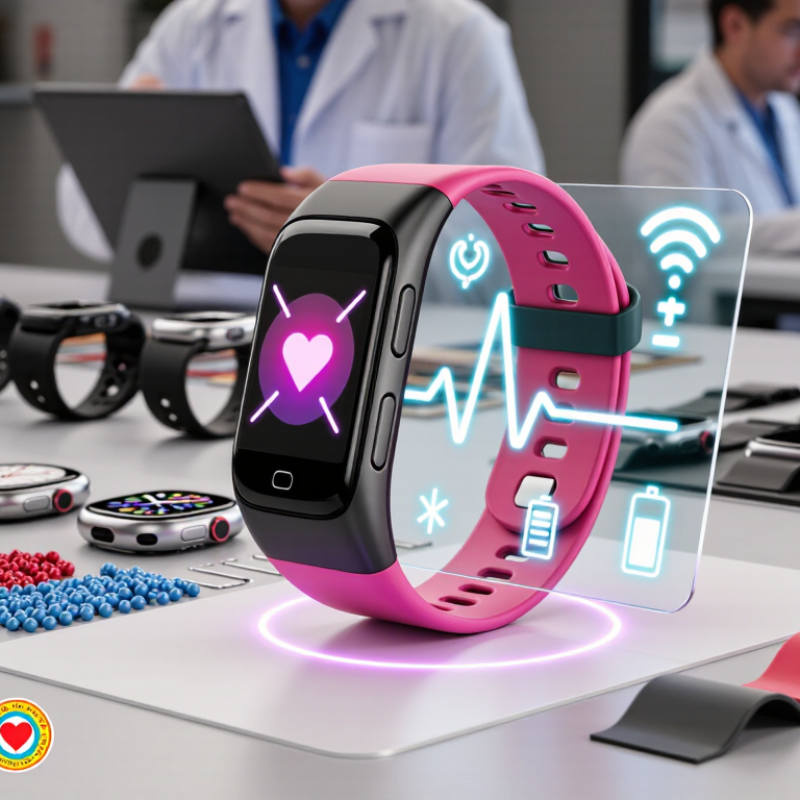
Activity tracker smartwatches are wrist-worn devices that combine timekeeping with sensors for daily movement and basic wellness monitoring. They commonly record steps, distance, calories, heart rate, sleep patterns, and exercise duration. Some models also estimate blood oxygen levels or stress, although these readings can vary with skin contact, motion, and software quality.
The distinction matters. A step count is an estimate, not a diagnosis. During testing, a loose strap or fast arm movement can create noticeably different results. The World Health Organization recommends adults complete 150–300 minutes of moderate physical activity weekly, giving these devices a practical role in tracking progress. However, they cannot replace clinical examinations or professional medical advice.
Market data shows why this category continues to attract manufacturing investment. IDC’s Worldwide Quarterly Wearable Device Tracker reported approximately 537 million wearable-device shipments globally in 2024, reflecting strong consumer demand for connected health tools. Grand View Research valued the global smartwatch market at about 33.6 billion US dollars in 2023 and projected continued growth through 2030. These figures include broader smartwatch segments, not only activity trackers.
For manufacturers in China, reliable sensor calibration, battery efficiency, skin comfort, and data protection remain essential quality indicators. A bright screen is useful, but it means little if overnight battery life fails. That practical detail is easy to overlook. Buyers should compare measurement consistency, app transparency, water resistance testing, and after-sales support rather than relying only on feature lists.
| Product Dimension | Typical Specification or Range | What It Measures or Provides | Practical Selection Consideration |
|---|---|---|---|
| Product Definition | A wearable electronic device that combines fitness tracking with selected smartwatch functions. | Records daily movement, exercise, health-related signals, notifications, and time-based functions. | Choose a model according to the required health, sports, communication, and battery features. |
| Motion Sensors | Standard feature Three-axis accelerometer; many models also include a gyroscope. |
Counts steps, detects movement, estimates distance, identifies exercise patterns, and tracks body motion. | A gyroscope can improve motion recognition, workout tracking, and orientation detection. |
| Optical Heart-Rate Sensor | Wrist-based photoplethysmography, commonly known as PPG. | Provides periodic or continuous heart-rate estimates during rest, daily activity, and exercise. | Accuracy is affected by fit, skin contact, movement, tattoos, skin temperature, and workout intensity. |
| Blood Oxygen Estimation | Red and infrared optical sensing on selected models. | Estimates peripheral oxygen saturation, often displayed as SpO2. | Results are wellness estimates and should not be treated as a medical diagnosis. |
| Sleep Tracking | Movement and heart-rate-based analysis; some devices add blood oxygen or breathing-related signals. | Estimates sleep duration, sleep timing, wake periods, and sleep stages. | Sleep-stage results are estimates and may differ from clinical sleep-monitoring equipment. |
| Positioning | Connected GPS through a paired smartphone or built-in GNSS on selected models. | Records outdoor route, pace, speed, and distance during walking, running, or cycling. | Built-in GNSS is more independent but generally consumes more battery power. |
| Activity Modes | Usually includes walking, running, cycling, indoor exercise, swimming, and general workout modes. | Applies activity-specific algorithms to estimate duration, distance, pace, calories, or heart rate. | The number of modes is less important than the quality and relevance of the desired exercise profiles. |
| Energy Expenditure | Estimated from movement, heart rate, user profile, exercise duration, and related inputs. | Provides an approximate daily calorie and workout calorie estimate. | Energy values are estimates rather than direct measurements and should not replace professional nutrition guidance. |
| Battery Runtime | Approximately 1–3 days for feature-rich smartwatch use; approximately 5–14 days for many fitness-focused designs. | Determines how often the device must be charged. | Always-on displays, GNSS, frequent measurements, calls, and notifications can significantly reduce runtime. |
| Water Resistance | Common ratings include IP67, IP68, or 5 ATM, depending on the design and testing standard. | Indicates resistance to dust or water exposure under specified test conditions. | IP and ATM ratings are not identical. Water-resistance limits should be checked before swimming or showering. |
| Display | Color LCD, OLED, or AMOLED screen; sizes commonly range from about 0.9 to 2.0 inches. | Shows time, health metrics, workout information, notifications, and device controls. | AMOLED generally provides strong contrast and low-light readability, while larger screens improve interaction. |
| Wireless Connectivity | Bluetooth Low Energy is common; some models also support Wi-Fi, NFC, or cellular connectivity. | Enables phone synchronization, notifications, payments, data transfer, or independent communication. | Compatibility depends on the device operating system, application support, regional services, and wireless standards. |
| Smartphone Compatibility | Many devices support current versions of Android and iOS, but feature availability can vary. | Allows data synchronization, firmware updates, app configuration, and notification management. | Confirm the required operating-system version and application permissions before purchasing. |
| Materials and Comfort | Common materials include aluminum or polymer cases, glass or polymer screens, and silicone or fluoroelastomer straps. | Affects durability, weight, skin comfort, and suitability for long-term wear. | Lightweight construction and adjustable straps are important for sleep tracking and continuous monitoring. |
| Data Management | Mobile application with cloud synchronization, dashboards, historical records, and export options on selected devices. | Stores and presents trends for activity, exercise, heart rate, sleep, and other recorded metrics. | Review privacy controls, account requirements, data-export options, and local regulatory practices. |
| Manufacturing Quality Factors | Sensor calibration, firmware stability, sealing quality, battery safety, optical window design, and final inspection. | Influences measurement consistency, durability, water resistance, and user experience. | When evaluating a manufacturer, request test documentation, quality-control procedures, sample validation, and after-sales support details. |
They often combine optical heart-rate sensors, accelerometers, gyroscopes, and skin-temperature sensors.
Multi-band GNSS can improve route tracking in streets, parks, and open areas.
No. Artificial intelligence identifies patterns in heart rate, training load, and sleep.
Compare normal battery life, low-power modes, and battery-cycle test results.
Request factory audit records, production capacity, export experience, and tooling ownership details.
Ask for sensor accuracy tests, waterproof testing, battery-cycle results, and app performance records.
Confirm minimum order quantities, replacement policies, firmware updates, inspection standards, and data protection procedures.
A very low price may reflect weaker sensors, unstable batteries, or limited testing.
An Activity Tracker Smartwatch combines timekeeping with health, fitness, and daily activity monitoring. It can record steps, distance, calories, heart rate, sleep patterns, workout performance, and selected wellness indicators, while often supporting notifications, app connectivity, and customizable displays. Chinese manufacturers are evaluated through product quality, sensor accuracy, software stability, production capacity, certification, customization services, communication, and after-sales support. A reliable supplier should also demonstrate consistent quality control and transparent manufacturing processes.
Leading Chinese manufacturers typically offer solutions for different markets, including entry-level consumer devices, professional fitness products, and customized models for private-label businesses. Their technologies may include optical health sensors, GPS positioning, Bluetooth connectivity, water resistance, long-lasting batteries, and companion mobile applications. To choose a suitable manufacturer, buyers should clearly define the target users, required functions, budget, order volume, design expectations, and compliance needs. Comparing samples, testing performance, reviewing production capabilities, and confirming delivery and support policies can help ensure a practical and dependable partnership.