
Buying a Fitness Tracker Smartwatch can feel like choosing between dozens of identical black screens. Yet the differences appear during real use: a loose sensor, a weak battery, or confusing health graphs can change your experience.
The market is expanding quickly. IDC’s Worldwide Quarterly Wearable Device Tracker reported approximately 537.6 million wearable-device shipments in 2024, including smartwatches and fitness bands. Deloitte’s 2024 Digital Consumer Trends survey also found that about four in ten United States consumers own a smartwatch or fitness tracker. These figures show strong demand, but popularity does not guarantee accuracy or comfort.
Stanford professor Michael Snyder, a leading wearable-health researcher, has emphasized that “wearables can provide valuable health insights, but they are not medical devices.” That distinction matters. A watch may notice an unusual heart-rate pattern, but it cannot explain every symptom or replace professional care. Some readings will be imperfect.
Our 10 Tips for Buying a Fitness Tracker Smartwatch will examine sensor quality, battery life, display visibility, comfort, app support, water resistance, and data privacy. We will also compare practical details, such as whether the watch survives a sweaty workout or lasts through a weekend trip. Price matters, but long-term usefulness matters more.
Think beyond the showroom. Can you read the screen under bright sunlight? Does the strap irritate your skin? Will you actually wear it while sleeping? These small questions often decide whether a smartwatch becomes a helpful habit or an expensive drawer item.
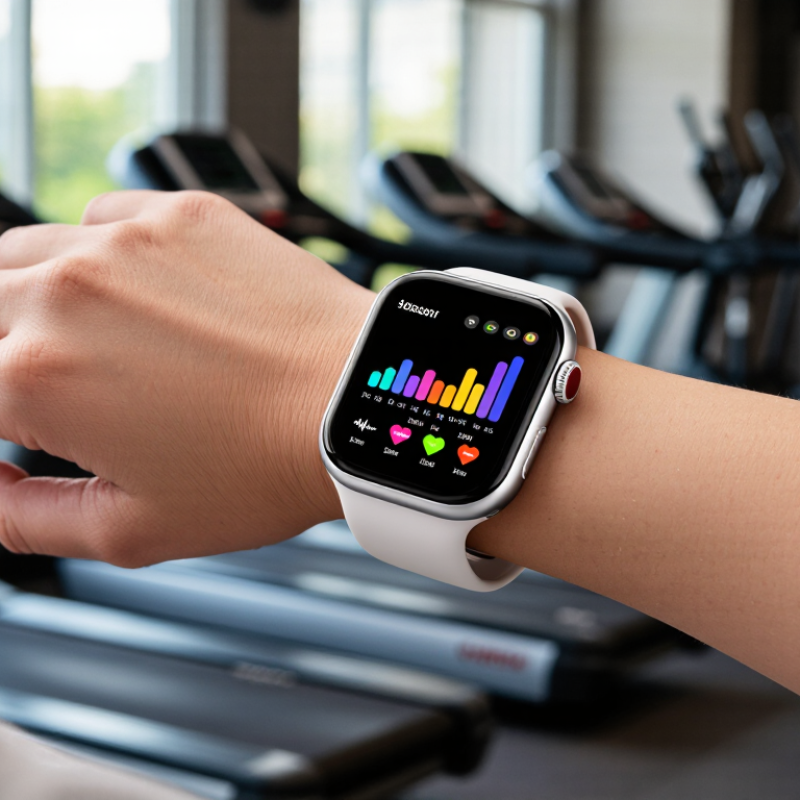
Before choosing a fitness tracker smartwatch, decide what you want it to help you do. A daily step count may be enough if you mainly want a gentle nudge to walk more. If you train for a 5K, you may care more about pace, distance, and heart-rate trends. Be specific. “Get fitter” is hard to measure; “take a 20-minute walk after lunch” gives you a clear starting point.
Think about your ordinary day, not an ideal one. Do you sit at a desk, work on your feet, cycle to work, or exercise in short bursts? A watch that tracks steps and prompts movement may suit a desk worker, while a runner might value GPS and workout timing. Consider when you can wear it, too. If you remove watches at work or forget to charge devices, frequent reminders or daily charging may become annoying.
Keep your expectations realistic. Wrist-based heart-rate readings can be less dependable during some activities, and calorie estimates are not precise measurements of what you have burned. Treat the numbers as useful patterns, not medical advice or a scorecard. A simple notebook can help: record your usual steps, workouts, and sleep for several days before shopping. It is a little tedious. Still, those notes may reveal which features you will actually use.
A fitness tracker’s sensor list matters less than how consistently it measures you. Optical heart-rate sensors use light against your skin, so a loose band or cold hands can affect readings. Wear the watch snugly, just above your wrist bone, during a brisk walk and a quiet rest. Notice whether the numbers jump unexpectedly. Small details count.
Compare the features you will actually use. Built-in GPS can map outdoor runs without a phone, while phone-connected GPS may depend on your handset. Sleep tracking can reveal rough patterns, but it cannot diagnose a sleep disorder. A blood-oxygen reading is also an estimate, not a medical test. More metrics can mean more noise.
Check how each device explains accuracy, not just its sensor count. Look for testing details, clear limitations, and the conditions used for measurements. If possible, compare heart-rate readings during steady exercise with a trusted chest strap or gym monitor. Wrist readings may lag during intervals. That is normal, but it can still be frustrating. Repeat the same route or workout on several days, and check whether results stay reasonably consistent. I would also test the fit during ordinary tasks; a watch that pinches at a desk rarely feels better on a long walk. Don’t expect perfect numbers.
Battery claims are only a starting point. Check whether the estimate assumes the screen stays dark and notifications are limited. A bright display, frequent workout tracking, and GPS can drain a charge faster. If possible, compare reviews that describe similar daily use. Charging every night may be fine, but it can become annoying during travel. Small details matter.
Comfort shows up after several hours, not during a quick try-on. Look for a light case, smooth edges, and a strap that adjusts without pinching. Wear it snug enough to read your pulse, but not so tight that your skin feels sore. Sweat can collect beneath a strap, so removable, washable materials are useful. I still underestimate how much a bulky case bothers me until I wear one through a full day.
For durability, inspect the screen, case, clasp, and charging connection. A tracker that catches on a jacket sleeve may not suit everyday wear. Water resistance ratings describe specific test conditions; they do not mean every device is safe for swimming, hot showers, or deep water. Check the maker’s limits and care instructions, especially after exposure to salt water or soap. Ratings can be easy to misread. A scratched screen or loose clasp can matter more than a rugged-looking finish.
| Tip | What to Evaluate | Useful Benchmark or Check | Why It Matters |
|---|---|---|---|
| 1. Check real-world battery life | Compare expected battery life with the features you plan to use, such as an always-on display, notifications, and continuous heart-rate tracking. | Many fitness watches last several days between charges; GPS workouts and always-on displays can shorten runtime substantially. Check estimates for both typical use and GPS use. | A stated maximum may not reflect everyday use, and frequent charging can interrupt sleep or activity tracking. |
| 2. Try the fit and comfort | Consider case size, thickness, weight, strap material, buckle, and whether the watch stays comfortable during sleep and exercise. | If possible, wear it for several minutes and check for pressure points. A lighter, less bulky design is often easier to wear overnight. | A comfortable fit makes consistent wear—and therefore continuous tracking—more likely. |
| 3. Verify water resistance | Read the stated water-resistance rating and the manufacturer's guidance for swimming, showering, and water sports. | A 5 ATM rating is commonly intended for swimming at shallow depths under specified test conditions; it does not mean the device is suitable for scuba diving. IP ratings use a different classification system. | Water resistance has limits, and ratings are not interchangeable. Heat, pressure, and wear can affect seals. |
| 4. Assess durability | Look at the case and screen materials, scratch protection, strap attachment, and availability of replacement bands. | Check the care instructions and warranty terms. No screen material is scratch-proof, and impact resistance depends on the design and conditions of use. | A durable design is better suited to repeated workouts and daily wear, but protective materials do not eliminate damage risk. |
| 5. Confirm phone compatibility | Check whether the companion app and key features work with your phone's operating system and version. | Review the manufacturer's compatibility list before buying; some features may be limited on certain phones. | Compatibility affects setup, notifications, syncing, and access to health or fitness features. |
| 6. Match GPS to your workouts | Determine whether the watch has built-in GPS or uses your phone's GPS, and check how GPS affects battery life. | Built-in GPS can record routes without carrying a phone; connected GPS relies on a nearby phone. Compare published GPS runtime if you take long sessions. | The right setup depends on whether you want phone-free route tracking or prioritize longer battery life. |
| 7. Review health and activity sensors | Check which measurements are included, such as heart rate, steps, sleep, and workout tracking, and read the feature limitations. | Wrist-based readings can be affected by fit, motion, skin contact, and activity type. Treat consumer readings as estimates, not medical diagnoses. | Knowing how measurements work helps set realistic expectations and choose features relevant to your routine. |
| 8. Check display readability | Assess screen visibility in bright sunlight, indoors, and during movement; consider text size and touch controls. | Try reading the screen at your typical workout pace. A brighter display may be easier to see but can use more power. | Clear, quick-to-read information is useful when checking pace, time, or heart rate during exercise. |
| 9. Compare app and data controls | Review how activity data is stored, shared, exported, and deleted, along with the app's privacy settings. | Read the privacy policy and check whether you can manage data sharing and account access in the app. | Fitness and health data can be personal; clear controls help you make informed choices about its use. |
| 10. Factor in ownership costs | Check whether core tracking features require a subscription and consider replacement straps, chargers, and warranty coverage. | Compare the total expected cost over the period you plan to use the watch, not only its purchase price. | Ongoing fees and accessories can change the overall value of a device. |
Note: Benchmarks and feature availability vary by model. Always confirm specifications, rating definitions, and care instructions with the product documentation.
Before buying a fitness tracker smartwatch, confirm it works with your phone’s operating system and current software version. Check whether key features need a separate app, account, or paid subscription. Sleep charts and step counts are useful only if you can access and understand them. Try the app’s setup process before purchase, if possible. Small detail.
Connectivity affects everyday use. Bluetooth usually handles syncing, while cellular models may work away from your phone but need additional service. IDC reported 534.6 million wearable-device shipments worldwide in 2024, underscoring how varied this product category has become. Shipment volume does not prove any device is right for you. Check how often the watch syncs, whether notifications can be limited, and what happens when the connection drops.
Privacy deserves the same attention as battery life. Pew Research Center found that 81% of U.S. adults felt the risks of companies collecting data outweighed the benefits, in a 2019 survey. Review the privacy settings before entering health details. Look for controls to delete stored data, restrict location access, and manage data sharing. Also check whether an account is required for basic functions. A neat permissions screen can still hide confusing choices; read slowly, and reconsider what you truly need to share.
A fitness tracker’s sticker price is only the starting point. Compare the total cost over two or three years, including required app subscriptions, replacement bands, and charging accessories. For example, a hypothetical $8 monthly plan costs $96 a year, or $288 over three years. Check whether core features, such as sleep history or workout reports, remain available without payment. Small fees add up.
Market growth makes careful comparison worthwhile. Grand View Research estimated the global fitness tracker market at $52.7 billion in 2023, with projected annual growth of 17.8% from 2024 to 2030. IDC reported that worldwide wearable-device shipments rose 6.1% to 537.9 million units in 2024. These figures cover broad markets, not a guarantee that any particular tracker offers good value. Compare prices across sellers, but also check return terms and warranty exclusions. Read the fine print.
Look for warranty details on battery degradation, screen damage, water exposure, repair time, and shipping costs. User reviews can reveal practical issues: a clasp that loosens during runs, or sleep tracking that stops after a software update. Give more weight to repeated, specific complaints than to vague praise. I still tend to overvalue sleek screens; battery life matters more when charging slips my mind. Check reviews from people with similar routines, and note when they were posted, since updates can change performance.
Wear it snugly above your wrist bone. Loose bands and cold hands can distort readings. Check results during rest and brisk walking.
Not always. Wrist sensors may lag during interval training. Compare steady exercise readings with a trusted chest strap or gym monitor.
Built-in GPS can map outdoor runs without a phone. Phone-connected GPS depends on your handset and its connection.
No. Sleep tracking shows rough patterns, not medical diagnoses. Blood-oxygen readings are estimates. More metrics can create more confusion.
Repeat the same route or workout across several days. Look for reasonably stable results, not perfect numbers. Unexpected jumps deserve attention.
Bright screens, frequent workouts, GPS, and many notifications drain power faster. Charging nightly may work, but travel can make it irritating.
Choose a light case, smooth edges, and an adjustable strap. Sweat can collect underneath. Washable, removable materials help. I often underestimate bulk.
Not necessarily. Ratings describe specific test conditions. Check the device’s limits after exposure to soap or salt water. Ratings are easy to misread.
Examine the screen, clasp, case, and charging connection. A sleeve-catching tracker may become annoying. A loose clasp matters more than a rugged appearance.
Choosing a Fitness Tracker Smartwatch starts with understanding your personal goals and everyday routine. Decide whether you mainly want to count steps, monitor workouts, track sleep, or follow a broader range of health measurements. Compare the available sensors and features, and consider how consistently and accurately they measure activity. A useful device should fit comfortably, withstand your typical workouts and daily use, and offer battery life and water resistance suited to your habits.
Before buying, check that the watch works with your phone and preferred apps, and review its connectivity options and privacy controls. Look beyond the initial price to account for any recurring subscription fees, and examine the warranty terms and feedback from other users. Weighing these factors together can help you choose a smartwatch that supports your needs, feels practical to wear, and offers good value over time.