
China is a major sourcing destination for fitness products, but manufacturers differ in experience, production capacity, and quality controls. This guide introduces ten Chinese Home Exercise Equipment manufacturers and the factors buyers can examine before starting a conversation. A polished catalogue is useful, but it cannot show how a treadmill’s belt behaves after repeated use or how evenly a dumbbell’s coating is applied.
Details matter. The comparison considers product range, engineering capabilities, customization options, factory processes, and export support. For strength equipment, buyers may inspect frame welds, finish quality, and moving parts. For cardio machines, noise, stability, console functions, and ease of maintenance deserve attention. These practical checks help make supplier comparisons more meaningful than price alone.
Company profiles and product claims should still be verified directly. Request current specifications, production references, sample units where appropriate, and clear information about inspection procedures and warranty support. A factory visit or independent quality review may provide further confidence, though neither guarantees every future shipment will be identical. That limitation is worth remembering. Supplier selection involves trade-offs: a manufacturer with broad customization may need more development time, while a standard model may offer a simpler purchasing process. The top ten are starting points, not a universal ranking. Use them to identify potential partners, ask specific questions, and judge whether each supplier fits your product requirements, budget, and expected order volume.
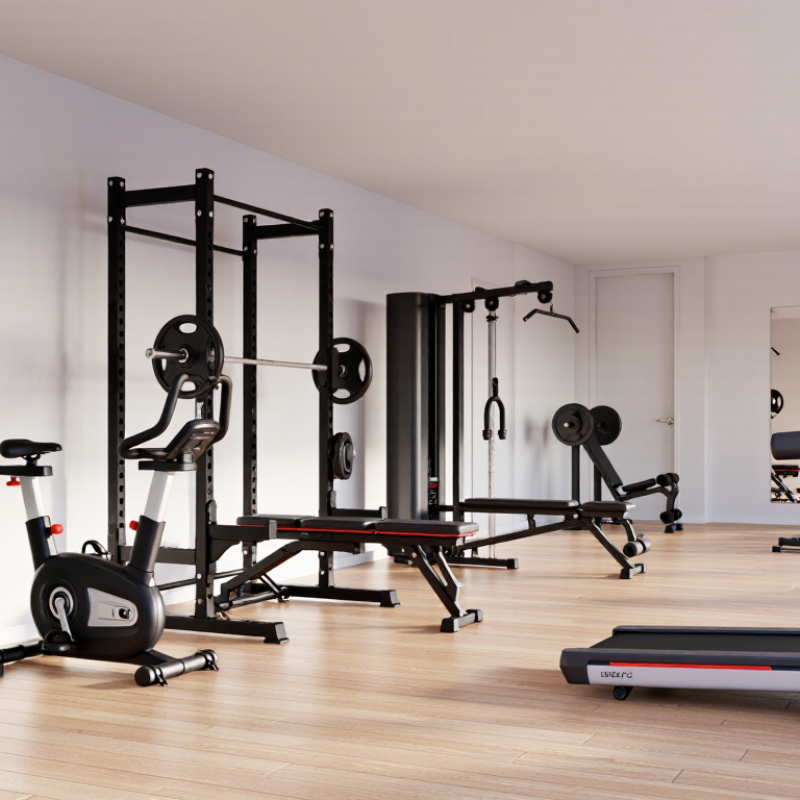
China’s home exercise equipment industry is a network, not a single production model. Some manufacturers design complete products, while others specialize in frames, motors, belts, or electronic controls. Many factories offer OEM or ODM services, adapting equipment to a buyer’s specifications. Product ranges often include treadmills, exercise bikes, strength-training benches, and compact accessories. Capabilities vary widely, even among suppliers making similar products.
Production may involve several nearby specialists. A steel frame can be cut and welded at one facility, then finished and assembled elsewhere. This setup can support flexible production, but coordination is not always smooth. For buyers, sample checks and clear inspection criteria matter. Ask how the factory tests stability, noise, moving parts, and packaging—not just whether it has a quality system. A polished showroom tells only part of the story.
Tips: Request a sample or detailed production photos. Compare the materials and finish with the written specification. Confirm who handles assembly, spare parts, and after-sales support. Small details count: a loose pedal or thin foam pad can change the user experience.
When evaluating Chinese home exercise equipment manufacturers, look beyond product photos and quoted prices. A credible supplier should explain how frames, welds, cables, and moving parts are checked during production. Ask for written quality procedures and recent test records. Ask for proof. A factory tour, in person or by live video, can reveal storage conditions, assembly flow, and whether inspection stations are actually used. Compare sample units with production specifications, including dimensions, finish, and included accessories. A low price means little if parts vary between batches.
Production capability matters, but it should match your order size and schedule. For a treadmill, ask how the running belt is aligned and how noise or vibration is checked under load. For benches and racks, inspect weld consistency, hardware fit, and stability on an uneven floor. Check material specifications and traceability for key components, then confirm how defects are recorded and handled. After-sales support should include spare-part availability, clear response times, and usable assembly instructions. A polished showroom can still hide weak process control. No checklist catches everything, so document sample findings and revisit them during production rather than relying on a single inspection.
Use this framework to compare manufacturers consistently. The weights and benchmarks below are suggested screening criteria, not verified company rankings or claims about any specific manufacturer.
| Criterion | Weight | What to Assess | Suggested Evidence or Screening Benchmark |
|---|---|---|---|
| Manufacturing Capacity and Process Control | 15% | Production equipment, process documentation, capacity planning, and controls for incoming materials, assembly, and final inspection. | Review a facility audit, documented production workflow, capacity records, and inspection procedures. Verify that stated capacity can support the proposed order volume and schedule. |
| Quality Management | 14% | Consistency of product quality, traceability, defect handling, corrective actions, and management of supplier quality. | Request quality records, sample inspection reports, a documented nonconformance process, and applicable quality-system certificates. Verify certificate scope and validity with the issuer. |
| Product Safety and Market Compliance | 13% | Safety design, testing, technical documentation, and compliance with requirements for the intended product type and destination market. | Check relevant parts of the ISO 20957 series for stationary training equipment where applicable, along with destination-market requirements. Review test reports for the exact model and configuration being sourced. |
| Engineering and Research Capability | 12% | Product development, mechanical and electrical engineering resources, prototyping, design validation, and management of product changes. | Review engineering capabilities, prototype and validation records, product drawings, and the process for approving design changes. Confirm that test evidence matches the production design. |
| Product Range and Technical Fit | 10% | Ability to supply the equipment types, specifications, and configurations required for the buyer’s intended use and price segment. | Compare specifications, materials, dimensions, rated user limits, operating features, and available test documentation across the products under consideration. |
| Export Experience and Documentation | 10% | Experience managing international orders, shipping coordination, export documents, packaging requirements, and communication across time zones. | Request redacted examples of shipping and product documentation, packaging specifications, and references that can be independently checked. Confirm responsibilities and delivery terms in writing. |
| Supply-Chain Reliability | 8% | Supplier qualification, component availability, inventory planning, production scheduling, and contingency planning for disruptions. | Review supplier-control procedures, lead-time assumptions, critical-component plans, and the process for notifying customers about shortages or schedule changes. |
| OEM and ODM Capabilities | 6% | Ability to support buyer specifications, packaging and labeling requirements, product customization, and ownership or use of design files. | Confirm minimum order quantities, sample and tooling terms, customization limits, intellectual-property provisions, and written approval procedures before production. |
| After-Sales Support and Spare Parts | 6% | Warranty administration, troubleshooting, replacement-part availability, service documentation, and responsiveness to product issues. | Review written warranty terms, spare-parts lists, service manuals, response procedures, and the process for handling safety-related complaints or corrective actions. |
| Environmental and Workplace Practices | 6% | Environmental management, worker safety, responsible sourcing, and the quality of supporting records. | Review relevant policies, audit findings, and applicable certificates or permits. Verify their scope and validity rather than relying on unsupported statements. |
| Total Weight | 100% | Apply the same scoring rules and evidence standards to each candidate to create a comparable shortlist. | |
Profiles of ten notable Chinese home exercise equipment manufacturers can be understood through their specialties, rather than a simple ranking. One focuses on compact treadmills, where stable handrails and clear folding locks matter in small rooms. Another builds indoor cycling bikes, with attention to seat adjustment and smooth resistance changes. A third makes strength benches with thick, firm padding. A fourth produces adjustable dumbbells designed to save storage space. Small details count.
A fifth profile centers on resistance bands and lightweight training accessories, where material consistency is important. A sixth manufactures rowing machines, balancing quiet movement with a frame that fits home use. A seventh focuses on multi-station gyms, combining several exercises in one footprint. An eighth supplies yoga and mobility equipment, such as mats and rollers. Product ranges and capabilities vary, so these profiles are useful starting points, not verified company rankings.
The final two profiles highlight connected training equipment and basic recovery tools. Smart displays can make workouts easier to follow, but clear instructions still matter. Foam rollers and massage tools call for durable surfaces and comfortable handling. Buyers can compare sample quality, assembly steps, spare-part support, and packaging protection. A product may look impressive in a catalog. It may feel different in a real home. That gap deserves a closer look.
This chart shows the World Health Organization’s recommended weekly range of moderate- or vigorous-intensity aerobic activity for adults. These guidelines can help people plan home workouts; they are health recommendations, not manufacturer or product rankings.
China’s home exercise equipment manufacturers produce treadmills, exercise bikes, strength stations, adjustable benches, and compact accessories. For strength products, frame geometry and steel thickness affect stability under repeated loading. A treadmill’s deck, belt, and cushioning system influence both running feel and maintenance needs. Details matter.
Manufacturing capabilities often include tube cutting, welding, surface treatment, assembly, and packaging. Some factories use automated welding or laser cutting, while others rely on skilled manual work; the process matters less than consistent inspection. Buyers can request load-test records, finish samples, and checks of moving parts such as pulleys and folding hinges. These details reveal more than a polished showroom display.
Technology ranges from basic resistance mechanisms to consoles with workout data and wireless connectivity. Connected features require dependable sensors, clear instructions, and practical after-sales support. For export orders, clarify customization options, packaging dimensions, production capacity, and spare-part availability before confirming specifications. A supplier may offer many models, yet still need time to validate a new frame or control panel. That gap deserves an honest conversation.
Choosing among China’s top ten home exercise equipment manufacturers starts with your business model, not a ranking. A small online retailer may need low minimum orders, compact cartons, and dependable restocking. A gym buyer may care more about frame stability, user weight limits, and replacement parts. Your priorities differ.
Ask manufacturers for product specifications, material details, packaging dimensions, and realistic production times. For treadmills or strength machines, request test records relevant to the equipment and intended use. Compare warranty terms and how quickly common parts can be supplied. Details matter. A low unit price can lose its appeal when shipping costs rise or spare parts take weeks.
For private-label orders, check sample quality against a production unit, not just a polished showroom model. Confirm who handles inspection and what happens when a batch fails agreed requirements. References from buyers with similar order sizes can reveal useful patterns, though they are not guarantees. A neat spreadsheet helps, but it cannot show every production weakness; I would still leave room to question my own comparison.
It is a network of manufacturers and specialized suppliers. Some make complete products, while others produce frames, motors, belts, or electronic controls.
Product ranges may include treadmills, exercise bikes, strength-training benches, and compact accessories. Capabilities vary between factories.
One facility may cut and weld a steel frame, while another finishes and assembles it. This can add flexibility, but coordination may be uneven.
Ask how it tests stability, noise, moving parts, and packaging. A polished showroom is not enough evidence.
Low minimum orders, compact cartons, and reliable restocking may matter most. Confirm production times before planning a launch.
Check frame stability, user weight limits, and replacement-part availability. A sturdy-looking machine still needs suitable test records.
Compare the sample with a production unit, not only a showroom model. Differences can be small but costly.
Shipping costs and delayed spare parts can reduce its value. A spreadsheet helps, but it cannot reveal every weakness.
Review materials, packaging dimensions, warranty terms, inspection responsibilities, and after-sales support. Check who handles assembly and spare parts, too.
References from buyers with similar order sizes can reveal patterns, but they are not guarantees. I would still question my comparison.
This overview explains how China’s Home Exercise Equipment industry is organized, from product development and component sourcing to factory production and quality control. It outlines practical criteria for identifying leading manufacturers, including manufacturing capacity, product range, customization options, quality management, export experience, and communication. The article also presents profiles of ten notable manufacturers without focusing on brand names, highlighting the different strengths and capabilities found across the sector.
Readers will learn about common product categories, manufacturing technologies, and features that distinguish equipment for home use. The final section offers a framework for comparing suppliers according to specific buying needs, such as product type, order volume, budget, customization requirements, and expected delivery timelines. Together, these topics help buyers evaluate manufacturers more consistently and make informed sourcing decisions.