Choosing Fitness Resistance Bands starts with matching the band to your movement, strength, and training space. A compact mini loop can sit above the knees for glute exercises, while a long power band can assist pull-ups or add resistance to squats. Tube bands with handles feel familiar for presses and rows. Flat therapy bands offer light, adjustable resistance for mobility work.
Small details matter. Check the band’s length, material, grip, and resistance range before buying. A band that feels manageable during a slow row may become harder to control during a fast movement. That matters. Bands also stretch differently, and resistance usually increases as they lengthen. The color alone is not a reliable guide; brands often use different color systems.
Fitness pioneer Jack LaLanne is often credited with saying, “The best exercise is the one you will do.” That idea helps frame this choice: the most useful band is one you can handle safely and use consistently. Still, no single type suits every person or exercise. A door anchor may expand a tube band’s uses, but only when the anchor is secure and designed for that purpose. Inspect bands for cracks or thinning, and stop using damaged ones. Simple checks are easy to skip.
This guide compares the main band types, their strengths, and their trade-offs. It also considers resistance levels, comfort, and common training goals. The answer may be less tidy than a shopping chart suggests. A good fit often comes down to trying the movement, not trusting a label.
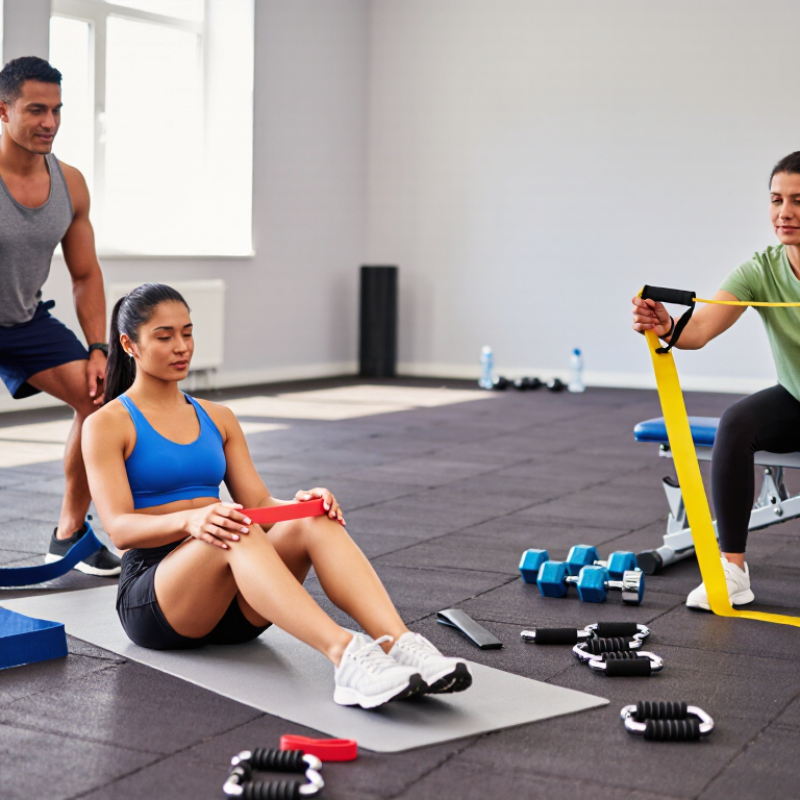
Resistance-Band Types: Flat Bands, Tube Bands, Loops, and Fabric Bands
Resistance bands come in several shapes, and each changes how resistance feels. Flat bands are long, thin strips that work well for mobility drills, gentle stretching, and rehabilitation exercises. They pack easily, but can roll or pinch if you grip them tightly. Tube bands usually have handles, making them practical for rows, presses, and standing curls. Their resistance can feel less even near the end of a movement, so keep each repetition controlled.
Loop bands form closed circles. Short loops are often used around the thighs for side steps, while longer loops can assist pull-ups or add resistance to lifts. Fabric bands feel broader and softer against the skin, and they tend to stay in place during glute bridges. They are less flexible for some upper-body exercises, though. No type is best for everyone; comfort, exercise choice, and band tension matter more than appearance.
Tips: Check bands for cracks or fraying before use, and anchor them securely. Start with light resistance. If a band slips, twists, or makes you change your form, pause and adjust it. A small detail, but an important one. Even experienced exercisers may need to test several styles before finding a comfortable fit.
What Types of Fitness Resistance Bands Are Best?
Compare the typical construction of flat bands, tube bands, loop bands, and fabric bands.
A value of 1 means the feature is typical of that band type; 0 means it is not typical. Flat bands are generally open strips, tube bands have a tubular body, and loop and fabric bands are commonly continuous loops. Designs vary, so use this as a guide to form—not a performance ranking. Flat bands are often chosen for mobility and rehabilitation exercises, tube bands for handle-based pulling exercises, and loop or fabric bands for lower-body workouts.
Flat Therapy Bands: Light Resistance for Mobility and Rehabilitation
Flat therapy bands are thin, flexible strips of latex or latex-free material, designed for gentle, adjustable resistance. They work well for mobility drills and rehabilitation exercises because you can change the tension by shortening your grip or easing your pull. A light band can help guide shoulder rotations, ankle movements, or seated leg extensions. The goal is smooth control, not a hard workout. Keep it gentle.
Tips: Check the band for small tears before use, and anchor it only around a stable surface. Move slowly, breathe normally, and stop if you feel sharp pain, numbness, or unusual discomfort. A mirror can help you notice whether your shoulders are creeping upward.
Choose a resistance that lets you complete each movement without jerking or holding your breath. More tension is not automatically better; even a light band can feel challenging when you pause at the end of a movement. For an injury-related routine, follow guidance from a qualified clinician, since suitable exercises depend on your condition and recovery stage. It can be tempting to stretch farther each day, but progress is not always tidy. Notice how the movement feels, and adjust rather than forcing it.
Tube Bands With Handles: Portable Resistance for Full-Body Training
Tube bands with handles make strength training portable: a pair fits in a small drawer, yet can support rows, chest presses, curls, squats, and overhead presses. They are most useful when the handles feel secure and the band provides enough tension for controlled repetitions. Start with a light tube. Check the tube for cracks before use, and keep your stance steady when pulling. Small detail, big deal.
The ACSM’s 2024 Worldwide Survey of Fitness Trends ranked traditional strength training fifth among 45 trends. That ranking reflects professional interest, not proof that bands outperform weights. The U.S. Physical Activity Guidelines recommend muscle-strengthening activity on at least two days per week, and tube bands can help make those sessions easier to fit around travel or limited space.
One limitation matters: tube tension increases as it stretches, so the hardest point may feel different from lifting a dumbbell. Adjust your distance from the anchor, or choose another band, to keep each repetition smooth.
A band can feel awkward at first. That is worth admitting. For balanced full-body sessions, pair pushing movements with pulling movements and train at a resistance that lets you maintain good form.
Mini-Loops and Fabric Bands: Targeted Training for Hips and Legs
Mini-loops are compact, easy to position, and useful for focused hip and leg work. Place one above the knees for glute bridges, or around the ankles for controlled side steps. Keep your feet pointing forward and your knees tracking over your toes. Small details matter. If the band rolls, pinches, or pulls your knees inward, adjust its position or choose lighter resistance. A stronger band is not automatically better.
Fabric bands often feel more secure against the skin and may stay in place during squats or lateral walks. They can suit people who find thin elastic bands uncomfortable, though fit varies with leg shape and movement. Try a few slow repetitions before building a full set. I sometimes catch myself chasing a harder burn; better form usually gives me more useful feedback. Not always. Stop if you feel sharp pain, and reduce tension if your movement becomes jerky. Mini-loops and fabric bands can both train the hips and legs, but comfort, control, and a suitable resistance level should guide your choice.
What Types of Fitness Resistance Bands Are Best? - Mini-Loops and Fabric Bands: Targeted Training for Hips and Legs
| Comparison |
Mini-Loop Bands |
Fabric Bands |
| Typical construction |
Closed loops made from latex or other elastic materials; designs and dimensions vary. |
Closed loops made from woven fabric, often with elastic fibers incorporated into the weave. |
| How resistance works |
Resistance increases as the band stretches. Products may be sold individually or in sets with different resistance levels. |
Resistance also increases with stretch. The feel depends on the fabric, elastic content, width, and length. |
| Common placements |
Around the thighs, just above the knees, or around the ankles, depending on the exercise and band size. |
Usually worn around the thighs or above the knees for lower-body exercises. |
| Useful exercises |
Clamshells, lateral walks, standing hip abductions, glute bridges, and warm-up drills. |
Glute bridges, squats, lateral walks, and other controlled hip- and leg-focused movements. |
| Fit and movement |
Thin bands are compact and easy to position, but may shift or roll during movement depending on fit and material. |
The wider surface can feel more stable on the thighs, though fit and construction still affect whether a band moves. |
| Portability |
Lightweight and compact; easy to carry in a small gym bag. |
Portable, but typically bulkier than a thin latex loop. |
| Care considerations |
Wipe clean and keep away from sharp edges. Latex versions may not suit people with a latex allergy. |
Follow the care label; fabric may need more drying time after washing or heavy sweating. |
| Best suited to |
People who want a compact option for warm-ups, activation drills, and adjustable lower-body exercises. |
People who prefer a wider band feel for thigh-level exercises and want an alternative to a thin elastic loop. |
Selection tip: Choose a band that stays in place and lets you complete controlled repetitions with good form. Resistance levels and sizing are not standardized, so check the product’s measurements and guidance before buying.
Choosing Band Tension: ACSM’s 8–12-Rep Range for Strength Training
What Types of Fitness Resistance Bands Are Best?
Resistance bands differ in shape and how they load a movement. Long loop bands suit rows, presses, and assisted pulls; tube bands with handles can feel easier to grip. Mini bands work well for short lateral steps and hip exercises. The best type is the one that lets you move smoothly and control the return.
For strength training, ACSM commonly recommends a load that allows about 8–12 repetitions. With a band, tension changes as it stretches, so choose one that makes the final few reps challenging without twisting your body or shortening the movement. Too easy? Step farther from the anchor or use a stronger band. Too hard? Reduce tension. Form matters more than the color or label.
Tips: Test the band for one set. Keep your wrists steady, and check that the anchor is secure before pulling. Stop if the band slips, cracks, or causes pain.
A useful check is whether you could manage one or two more clean repetitions at the end. If you can easily do five more, the resistance may be too light for that exercise. If your shoulders rise or your knees cave inward, it may be too heavy. Band tension is not perfectly consistent; even a small change in stance can alter the load. Recheck it when you switch exercises.
Conclusion
Fitness Resistance Bands come in several forms, each suited to different training needs. Flat therapy bands provide gentle, adjustable resistance for mobility work and rehabilitation exercises. Tube bands with handles are easy to carry and can support full-body workouts, from presses and rows to lower-body movements. Mini-loops and fabric bands are compact options for targeted exercises that challenge the hips and legs, with fabric versions offering a wider, comfortable fit for many users.
To choose the right band, consider both the exercise and your current strength. Resistance should let you maintain good form through each repetition while still making the final repetitions challenging. For strength training, the ACSM’s 8–12-rep range can serve as a useful guide: select a tension that makes this range demanding without compromising control. As strength improves, you can gradually increase resistance or adjust your exercises.