
0%

Travel can turn bedtime into a negotiation with unfamiliar sounds: a hotel elevator, traffic beyond thin curtains, or a roommate’s late-night scrolling. A Portable Sleep Sound Machine may help soften those distractions and make a new room feel more familiar. It cannot guarantee better sleep, and it should not replace advice from a qualified health professional when sleep problems persist.

Sleep scientist Dr. Matthew Walker has said, “Sleep is the single most effective thing we can do to reset our brain and body health each day.” That broader point helps explain why a consistent, calming bedtime routine matters. For travelers, the right device is usually the one that is easy to pack, simple to operate in the dark, and flexible enough for different rooms. Battery life matters on long trips. So do adjustable volume, a useful range of sounds, and controls that will not glow brightly beside the bed.

Small details count. A machine that fits in a side pocket is easier to bring; a faint fan-like hum may feel gentler than a sharp, looping track. Yet preferences vary, and “portable” does not always mean quiet or durable. The 10 picks ahead compare practical features, trade-offs, and travel-friendly designs, so you can choose with clearer expectations—not promises. Sleep is personal. Travel is unpredictable. A good match can still make the night feel less strange.
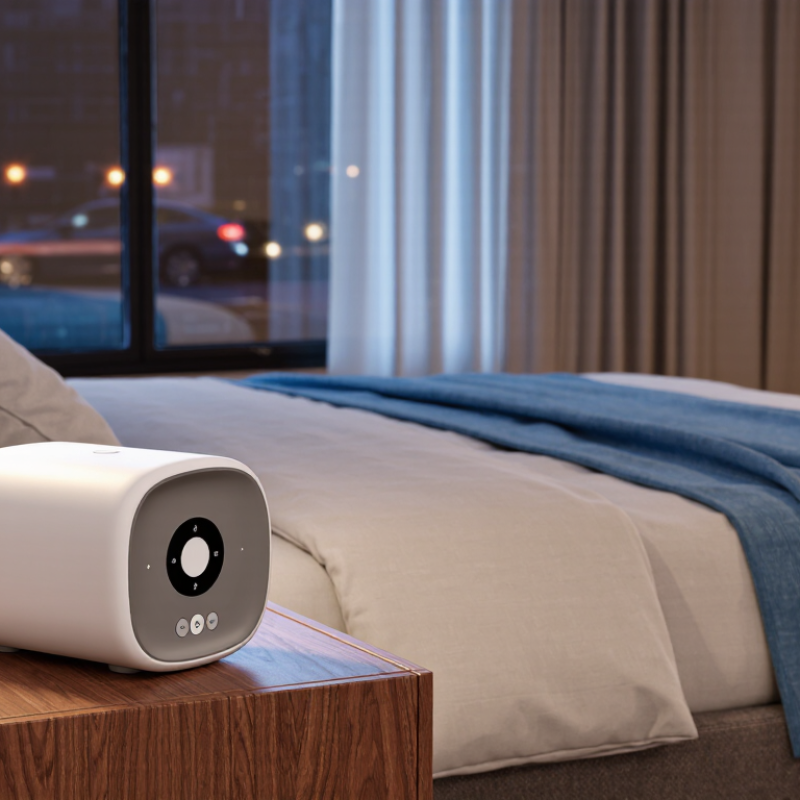
10 Best Portable Sleep Sound Machines for Travel

What Portable Sleep Sound Machines Are and How They Work

A portable sleep sound machine plays steady audio, such as fan-like noise, rain, or a low hum. Its main job is masking: a consistent sound can make sudden noises, like a hallway door closing, feel less noticeable. It does not block sound completely or guarantee sleep. Small speakers may also change tone at higher volumes, so listen before packing.

The American Academy of Sleep Medicine’s 2015 adult sleep-duration consensus recommends at least seven hours nightly for most adults. A sound machine can support a calmer routine, but it cannot replace enough sleep or address every cause of waking. Evidence on sound devices remains mixed, and individual responses vary. That matters: a gentle rain track may soothe one traveler and irritate another.

Tips: Test the machine at home first. Set it across the room, use the lowest comfortable volume, and choose a steady track without abrupt changes. Check battery life before a long trip. If the sound leaves your ears ringing or makes conversation difficult nearby, turn it down. I still find “more noise” an easy mistake; quieter often feels better.

Portable Sleep Sound Machines for Travel: How They Work

Idealized relative sound levels across octave bands

Sound machines play steady sounds that can help mask sudden background noises. This chart shows theoretical octave-band levels relative to 1 kHz: white noise rises by about 3 dB per octave, pink noise is even by octave, and brown noise falls by about 3 dB per octave. These are idealized noise spectra, not measurements of any particular device; actual sounds vary.

How Travel Conditions Shape Your Sound Machine Needs

Travel changes the sound problem. A quiet guest room can still have a rattling air conditioner, hallway footsteps, or traffic surges. The CDC recommends at least seven hours of sleep nightly for adults, making disrupted nights more than a minor inconvenience. Yet a sound machine should match the setting, not simply play louder.

The World Health Organization’s 2018 Environmental Noise Guidelines recommend keeping average nighttime outdoor noise below 40 dB Lnight. That figure is not a bedside target; it shows why persistent environmental noise matters. In a roadside room, steady, low-level sound may soften abrupt traffic changes. In shared accommodation, choose a device with adjustable volume and a timer, so its sound does not become another disturbance. Keep it away from the pillow. Small detail, real difference.

For flights and overnight trains, size, battery life, and simple controls matter more than a large library of sounds. A familiar, even hum may help some travelers settle, but preferences vary. It can also mask useful cues if played too loudly. I would not assume one setting works everywhere; test the volume at home, then use the lowest comfortable level while traveling. Check charging options before departure, because a dead battery is an avoidable surprise.

Key Features to Compare Before Choosing a Machine

Choosing a portable sleep sound machine means balancing sound quality, battery life, and luggage space. Compare its weight and dimensions with your usual travel pouch, then check whether it runs unplugged for a full night. A timer can save power, but continuous playback may be more reliable if room noise changes before dawn. Check the lowest volume setting, too; a machine that only sounds comfortable at high volume may be hard to use in a small hotel room.

Sound options matter. Fan-like noise can feel steady, while nature recordings may loop or change in ways that keep some sleepers alert. The World Health Organization’s Guidelines for Community Noise recommend keeping bedroom noise around 30 dB LAeq, with maximum sound levels below 45 dB LAmax. These are useful reference levels, not a guarantee of better sleep. Look for clear volume controls, dim or switchable lights, and charging that suits your other travel gear. One overlooked detail: tiny buttons are awkward in the dark.

Tips: Test the machine at home before packing it. Listen at a low setting from your pillow, not beside the speaker. If a sound feels irritating after ten minutes, it probably will not improve at 2 a.m.

10 Best Portable Sleep Sound Machines for Travel - Key Features to Compare Before Choosing a Machine

This comparison covers common machine types rather than specific products. Feature counts, dimensions, and battery life are representative ranges; actual specifications vary by model and volume level.

Machine Type Typical Size or Weight Power Options Typical Sound Selection Timer and Playback Travel Strength Key Trade-Off Best For
Mini rechargeable sound machine Palm-sized; about 100–250 g Built-in rechargeable battery; USB charging Usually 10–30 options, such as white noise, fan sounds, and nature sounds Commonly offers several timer settings and continuous playback Compact, cordless, and easy to pack in a carry-on Small speakers may sound less full at higher volumes Travelers who want a straightforward, all-purpose option
Clip-on portable sound machine Small and lightweight; often under 200 g Rechargeable battery or replaceable batteries, depending on model Usually a focused set of white-noise and nature sounds Often includes a timer; some models support continuous play Clip can attach to a stroller, bag, or nearby fabric surface Small controls and speakers can be less convenient in a dark room Families, shared rooms, and travelers who need hands-free placement
Battery-operated travel sound machine Compact; commonly about 150–350 g Replaceable batteries; some models also accept USB power Typically 5–20 basic sounds Often provides a timer and a simple continuous-play mode Can be used where charging outlets are unavailable Requires spare batteries, and battery life varies with volume Camping, road trips, and destinations with limited access to power
USB-powered compact sound machine Small tabletop unit; often about 200–500 g USB power from an adapter, laptop, or compatible power bank Usually includes several noise colors and environmental sounds Timer availability varies; some units play only while connected to power Lightweight and convenient when a USB outlet or power bank is available May not work cordless, so check whether a battery is built in Hotel stays and desk-to-bed travel setups
Sound machine with a soft night-light Compact bedside size; generally about 200–500 g Rechargeable battery, USB power, or both Often combines several sleep sounds with adjustable light settings May offer separate sound and light timers Combines two bedtime functions in one device Light features can increase size and shorten battery runtime Travelers who prefer a gentle light for nighttime orientation
Sound machine with a built-in clock Small bedside device; commonly about 250–600 g USB or wall power; battery backup may be available Usually offers a moderate selection of noise and nature sounds May include an alarm, clock display, and sleep timer Can replace a separate bedside clock Display brightness and extra controls may be distracting or bulky Travelers who want sound and basic clock functions together
Fan-based portable sound machine Compact but often heavier than a mini electronic unit Usually wall or USB power; some versions use batteries Produces a natural airflow sound rather than a library of recordings Typically continuous playback; timer features vary Provides a steady sound without selecting a recorded track Moving parts can make it less compact and may require cleaning People who prefer a consistent fan-like sound
White-noise-only pocket machine Very small; often around 50–180 g Rechargeable battery or replaceable batteries Usually a few steady noise settings, such as white, pink, or brown noise Often includes continuous play and a basic shutoff timer Simple controls and a small footprint make it easy to pack Offers fewer sound choices than multi-sound devices People who already know which type of noise helps them sleep
Nature-sound-focused portable machine Compact tabletop or palm-sized design; commonly about 150–400 g Rechargeable battery, USB, or replaceable batteries Often emphasizes rain, water, wind, and other environmental recordings May include a timer and volume adjustment; looping behavior varies Offers alternatives to steady broadband noise in a portable format Some recordings may have noticeable loops or changing sound levels Listeners who prefer environmental audio to a steady noise tone
Bluetooth-enabled portable sound machine Small speaker-style device; often about 200–600 g Rechargeable battery with USB charging Built-in sounds plus audio streamed from a compatible phone Playback controls may depend on the device, the phone, or an app Can play personal audio as well as built-in sleep sounds Pairing, notifications, and phone battery use can complicate bedtime Travelers who want both built-in sounds and personal audio playback

10 Best Portable Sleep Sound Machines for Different Travel Needs

The best portable sleep sound machine depends on the trip, not a universal ranking. For thin-walled hotels, choose steady, adjustable noise that softens hallway sounds without needing high volume. For flights and layovers, a palm-sized, rechargeable unit is easier to pack than one needing a wall outlet. Road trippers may prefer a timer; campers need dependable battery life. Small details matter: a covered button prevents accidental shutoffs, while dim controls are kinder to dark hotel rooms. Keep it simple.

Different needs call for different sounds. White noise suits travelers who want a consistent wash; rain or fan-like sounds may feel less harsh. Shared rooms benefit from a compact speaker placed near the sleeper, with volume low enough not to disturb others. For light sleepers, test the machine at home before relying on it abroad. It may not mask every door slam. That is a real limitation.

The CDC reported that 35% of U.S. adults slept under seven hours in 2014, a reminder that sleep can be fragile, though the figure is not travel-specific. The World Health Organization’s community-noise guidelines recommend bedroom sound levels below 30 dB LAeq for good-quality sleep. A sound machine adds sound; it does not lower the room’s noise level. Consider ten practical travel needs: compact size, rechargeable power, long battery life, adjustable volume, a timer, simple controls, dim indicators, steady noise, gentler nature sounds, and easy packing.

How to Use and Care for a Sleep Sound Machine on the Go

A portable sleep sound machine works best when it is easy to reach and set up. Before leaving, charge it fully or pack the correct cable and a small power adapter. Test its buttons at home, since unfamiliar controls can feel fiddly in a dark hotel room. Choose a steady, gentle sound and keep the volume low enough to hear an alarm or a travel companion. A familiar setting may help make an unfamiliar room feel less distracting, though it cannot guarantee better sleep.

Place the machine on a stable surface, away from pillows, bedding, and water. In a hotel, a bedside table is usually more practical than the floor; soft furnishings can muffle the sound. Follow the care instructions for cleaning, and wipe the exterior with a dry or slightly damp cloth only if permitted. Let it dry before packing. I once assumed a device was dry after a quick wipe. It was not a clever shortcut.

Tips: Pack the machine in a padded pouch, coil its cable loosely, and check the battery before bedtime. Keep the sound consistent rather than turning it up to cover every unfamiliar noise. At home, test your travel setup for a few nights; you may discover that the smallest adjustment matters most.

FAQS

Why might I need a sound machine in a hotel room?

A quiet room can still have rattling air conditioning, hallway footsteps, or passing traffic. These sounds may interrupt sleep.

What sound level should I use while traveling?

Choose the lowest comfortable setting. Test it from your pillow, not beside the speaker. Louder is not automatically better.

Should I keep the machine near my pillow?

No. Place it farther away, such as on a bedside table across the room. Small detail, real difference.

Which features matter most on flights or overnight trains?

Compact size, battery life, and simple controls matter. A familiar, steady hum may help some travelers settle. Preferences vary.

Is a timer always the best choice?

Not always. A timer can save power, but continuous playback may help when room noise changes before dawn.

How can I tell if a sound option suits me?

Try it at home for ten minutes at a low volume. Fan-like noise may feel steady, while changing nature sounds may distract some people.

What should I check before packing a portable machine?

Compare its size with your travel pouch and confirm it can run unplugged for a full night. Check charging options, too.

Do small controls and lights matter?

Yes. Tiny buttons can be awkward in a dark room, and bright lights may bother some sleepers. I still sometimes overlook this.

Conclusion

A Portable Sleep Sound Machine can make unfamiliar hotel rooms, campsites, and other travel settings feel calmer by playing steady sounds that help soften disruptive noise and support a consistent bedtime routine. The best option depends on how and where you travel: a lightweight design may suit a carry-on, while longer trips may call for dependable battery life and simple recharging. Consider sound choices, volume controls, ease of use, durability, and whether the device can operate without a phone or network connection.

This guide compares ten types of machines for different travel needs, from compact options for short trips to versatile choices for varied surroundings. It also explains how to use one thoughtfully: choose a comfortable volume, place it securely near your sleeping area, and check its power before leaving. Keeping the device clean, dry, and protected between uses can help it remain ready for your next journey.

Charlotte

Charlotte

Charlotte is a professional marketing specialist who combines strong product knowledge with a clear understanding of customer needs. She regularly contributes expert articles to the company website, sharing practical insights, explaining product features, and helping readers make informed......