
Choosing a Smartwatch with Sleep Tracking means looking beyond a colorful score on a morning screen. The best fit should feel comfortable overnight, record useful trends, and make its data easy to understand. This guide compares ten leading options for 2026, including their sleep metrics, battery life, comfort, app clarity, and overall value. Small details matter: a watch that needs charging every night may miss the very sleep you want to track.
Sleep scientist Matthew Walker has emphasized sleep’s role in health. He writes, “Sleep is the single most effective thing we can do to reset our brain and body health each day.” That perspective helps keep the technology in its proper place: a watch can estimate sleep stages and reveal patterns, but it cannot diagnose a sleep disorder. A polished graph is not proof. It can also be wrong.
The picks ahead are intended to help readers match features to real routines, whether that means checking overnight heart-rate trends, spotting inconsistent bedtimes, or simply avoiding daily charging. Sensor accuracy, comfort, and app interpretation can vary by person and software updates. That part deserves humility. Treat the numbers as clues, compare them with how you feel, and choose a device that supports better habits without turning every night into a test.
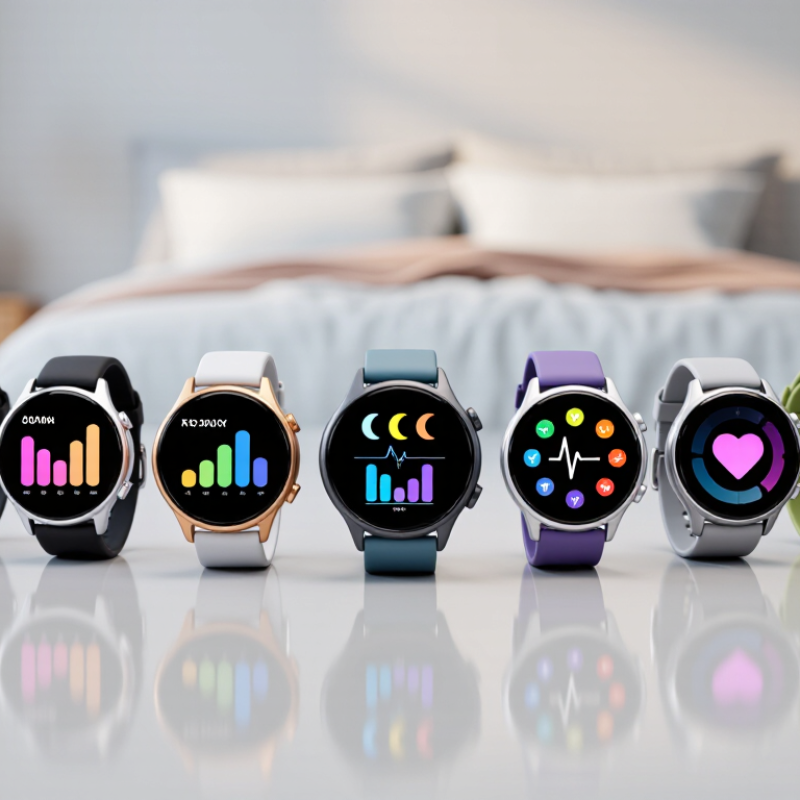
A smartwatch does not observe sleep itself; it estimates it from body signals. Optical sensors track changes in wrist blood flow and pulse, while motion sensors register turns, stillness, and restless movement. Some watches also estimate blood oxygen or skin temperature. Algorithms combine these signals to label periods as awake, light sleep, deep sleep, or REM sleep. Useful, but indirect. These stages are estimates, not measurements from a clinical brain-wave test.
Sleep summaries can reveal patterns across many nights: bedtime shifts, frequent movement, or changes in resting heart rate. A single score is less informative. The American Academy of Sleep Medicine’s 2018 position statement cautions that consumer sleep technology should not diagnose or treat sleep disorders. That matters because a watch may mistake quiet wakefulness for sleep. The CDC’s 2014 Behavioral Risk Factor Surveillance System found that 35% of U.S. adults reported sleeping fewer than seven hours per night; the AASM and Sleep Research Society recommend at least seven hours for adults. Tracking may help you notice a routine, but it cannot explain every tired morning. And sometimes the graph looks more certain than the evidence is.
Example sleep-stage estimates for one eight-hour night. Wearables infer sleep stages from signals such as movement and heart rate; results are estimates, not clinical measurements.
Sleep trackers may also record movement, heart rate, blood oxygen, breathing rate, and skin-temperature trends, depending on the device. The example values above are illustrative, not a real person's data.
When comparing sleep-tracking watches in 2026, treat accuracy as a pattern question, not a nightly verdict. Wrist sensors estimate sleep from movement and pulse; they do not directly measure brain activity. A quiet night may be misread as sleep, while restless wakefulness can look like light sleep. Fit matters. Wear the watch snugly above your wrist bone, without pinching. If it slides when you turn over, readings may drift.
Test the same watch for one or two weeks, and keep a simple diary: bedtime, remembered awakenings, and morning energy. Compare broad trends, such as whether a warm room coincides with more interruptions, rather than trusting a precise “deep sleep” score. For stronger validation, discuss recurring concerns with a clinician; consumer wearables are not diagnostic tools. Check whether the app explains missing data and sensor limits. I still catch myself giving a tidy graph too much credit. It looks convincing.
Comfort deserves equal weight. Wear the watch through a full night, then check for pressure marks, heat, strap noise, or irritation near the buckle. Charge it before bed, and make sure the display can stay dark. A device that tracks well but feels uncomfortable may end up on the nightstand. Judge it by how it feels, too.
A useful 2026 shortlist of the ten best smartwatches with sleep tracking should serve different sleepers, not chase one perfect score. Strong choices record bedtime, wake time, movement, and overnight heart-rate patterns. Some also estimate breathing changes or offer recovery guidance. The details vary, and sleep-stage estimates are not medical measurements. Comfort matters.
The best fit may be a slim watch for small wrists, a durable model for active days, or a long-lasting option for people who dislike nightly charging. Look for a soft strap, a quiet screen, and controls that do not light up when you roll over. A bright display at 2 a.m. is a small annoyance that can feel surprisingly large. Battery life deserves attention, too; frequent charging can leave gaps in your sleep record.
Compare how clearly each watch explains its data, not just how many charts it displays. A useful app shows patterns across several nights and lets you spot changes after late meals, travel, or stressful days. One rough night should not define your health. I would treat a polished sleep score with some caution, especially when the watch cannot explain what influenced it. Check whether the features you need work without a paid subscription, and whether the watch stays comfortable until morning.
The strongest sleep-tracking watches differ less in colorful charts than in what they measure overnight. Look for sleep duration, bedtime consistency, overnight heart-rate trends, and a clear way to review weekly patterns. The American Academy of Sleep Medicine recommends adults get at least seven hours of sleep regularly. That gives nightly estimates useful context, but it is not a diagnostic threshold. The AASM also cautions that consumer sleep technology should not replace validated testing for sleep disorders. Treat scores as clues, not verdicts.
Battery life changes the experience. Simpler models can often run for several days, while bright always-on displays, frequent GPS use, and continuous health measurements drain power faster. Check whether sleep tracking continues during low-power modes, and note how long a full charge takes. A watch that needs nightly charging may miss the very data you bought it for. Small detail, big consequence.
Peer-reviewed evaluations of wrist wearables also find that sleep estimates can differ from reference measurements, especially for wake periods. So compare trends across weeks, not one restless Tuesday.
Comfort matters too: a light case and soft strap are easier to keep on until morning. Specs look tidy; real sleep rarely does.
Choose a smartwatch by asking what you want to learn: bedtime consistency, overnight duration, or possible disruptions. The American Academy of Sleep Medicine and Sleep Research Society recommend adults regularly get at least seven hours of sleep. Yet CDC data from 2014 found 35% of U.S. adults reported sleeping less than seven hours. That gap makes trends useful, but one low-score morning is not a diagnosis.
Check whether the watch records sleep and wake times, offers a comfortable fit, and lasts through the night without charging. A loose band can produce patchy readings; a bright screen or bulky case may disturb sleep. Look for clear explanations of how estimates are made and whether data can be exported. The American Academy of Sleep Medicine cautions that consumer sleep technology should not replace validated testing or professional care. Sleep-stage labels can look precise. They are still estimates.
Match features to your routine. Shift workers may value flexible sleep windows, while light sleepers may prefer quiet vibration alarms over audio alerts. Compare a few weeks of readings with a simple note about caffeine, naps, or late meals. Patterns can help; they cannot prove what caused them. Don’t chase a perfect score. If tracking makes you anxious, that is useful feedback too.
This brand-neutral guide compares common smartwatch types rather than specific models. Features vary by device and software version; sleep stages and other wrist-based measurements are estimates, not medical diagnoses.
| Rank | Smartwatch profile | Typical sleep-tracking tools | Main advantages | Considerations | Best suited to |
|---|---|---|---|---|---|
| 1 | Full-featured health smartwatch | Sleep duration, schedule, overnight heart rate, and estimated sleep stages; some models also offer blood-oxygen readings. | Combines sleep summaries with a broad set of everyday health and smart features. | Frequent charging can make overnight wear less convenient; sensor features differ by model. | People who want sleep tracking alongside notifications, apps, and general health tools. |
| 2 | Long-battery fitness smartwatch | Overnight wear can support multi-night tracking of sleep duration, schedule, heart rate, and estimated stages. | Longer time between charges can help maintain a consistent sleep record. | Smartwatch apps and interactive features may be more limited than on app-focused designs. | People who prioritize continuous wear and fewer charging interruptions. |
| 3 | Multisport GPS smartwatch | Sleep summaries may sit alongside overnight heart-rate data and training or recovery metrics. | Useful for viewing sleep in the context of exercise and training routines. | Some designs are large or heavy, which may feel uncomfortable during sleep. | Runners and other active users who want both workout and sleep information. |
| 4 | Lightweight everyday fitness smartwatch | Common tools include sleep duration, bedtime trends, heart rate, and estimated sleep stages. | A lighter form can be easier to keep on overnight than a bulky sports watch. | Advanced health metrics and app options vary considerably across devices. | People seeking a comfortable balance of daily activity and sleep tracking. |
| 5 | Compact smartwatch for smaller wrists | May track sleep duration, movement, heart rate, and—in supported models—estimated stages. | A smaller case and band can improve overnight comfort for some wearers. | Compact designs may have smaller displays or shorter battery life than larger versions. | Anyone who finds standard-size watches uncomfortable in bed. |
| 6 | Hybrid analog-digital smartwatch | Depending on the model, sleep tracking may include duration, activity, and basic overnight trends. | Traditional watch styling can make it suitable for people who prefer a less screen-focused design. | Sleep reports and on-watch controls are often less detailed than on full-display watches. | People who value a conventional appearance and straightforward tracking. |
| 7 | Rugged outdoor smartwatch | Some models record sleep duration, overnight heart rate, and recovery-related trends. | Designed for demanding outdoor use and often suited to users who wear a watch around the clock. | Durable cases can be thicker and less comfortable for sleep; features depend on the model. | Outdoor enthusiasts who want one device for activities and overnight wear. |
| 8 | Budget fitness smartwatch | Often covers basic sleep duration and schedule; some devices estimate stages or measure overnight heart rate. | Can provide an accessible introduction to tracking sleep habits. | App quality, measurement consistency, and the amount of historical data may be limited. | First-time buyers who want basic trends without paying for extensive smart features. |
| 9 | Cellular-connected smartwatch | Sleep functions are generally similar to the same device's non-cellular version. | Cellular connectivity can be useful during the day when a phone is not nearby. | Cellular hardware and frequent connection use can increase charging demands; connectivity does not itself improve sleep measurement. | People who need independent calling or messaging and also want sleep tracking. |
| 10 | Simple sleep-and-activity smartwatch | Typically focuses on sleep duration, bedtime consistency, and basic activity trends. | A simpler feature set can make daily summaries easier to understand. | May lack detailed sleep-stage views, extensive health tools, or advanced customization. | People who want a clear overview of sleep habits rather than a large set of metrics. |
It tracks wrist movement and pulse changes. Some models also estimate blood oxygen or skin temperature. These are indirect signals.
It estimates awake, light, deep, and REM periods using body signals. It does not measure brain waves. The graph can look more certain than it is.
Little movement can resemble sleep to the sensors. Restless wakefulness may also be labeled as light sleep. It happens.
Wear the same watch for one or two weeks. Note bedtime, remembered awakenings, and morning energy in a simple diary. Look for patterns, not one perfect score.
Keep it snug above your wrist bone, but not tight. If it slides when you turn, readings may drift.
Look for pressure marks, heat, strap noise, or irritation near the buckle. A soft strap and dark screen can help. Comfort matters.
Usually, one night offers limited context. Compare several nights and notice changes after travel, late meals, or stressful days.
No. Consumer sleep tracking is not a diagnostic tool. Discuss recurring concerns with a clinician; I would not trust a tidy score alone.
Frequent charging can leave gaps in your record. Charge the watch before bed when needed. Small gaps add up.
A smartwatch can offer more than a record of bedtime and wake-up time. This guide explains how sleep tracking may estimate sleep duration, stages, restlessness, and overnight changes in movement or heart rate, while noting that these measurements are useful for spotting patterns rather than making medical diagnoses. It also explores how to assess a watch’s consistency, comfort, fit, and ease of use, since a device that feels intrusive may be difficult to wear overnight.
The guide compares 10 leading smartwatches with sleep tracking in 2026, considering sleep features alongside battery life and everyday practicality. It outlines how differences in tracking detail, charging needs, comfort, and access to sleep insights can shape the experience. The final section helps readers choose a Smartwatch with Sleep Tracking that suits their routines and priorities, whether they value clear sleep summaries, longer time between charges, or a comfortable design for nightly wear.